Why our modern day superheroes may not be so different from those of the medieval past
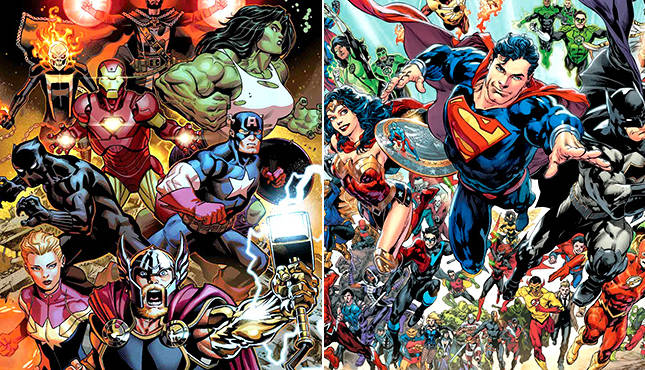
What first comes to mind when someone says the word ‘superhero’? Between 2016-2026, superhero movies generated an estimated $30 billion in box office revenue alone. We credit Marvel and DC comics with the innovation behind the characters we love, those who are seemingly human, but who have the ability to metamorphose into the otherworldly, or the supernatural. However, while Martin Goodman and Malcom Wheeler Nicholson may be the original masterminds behind the modern day characters we know and love, ‘the superhero’ is a concept that far precedes their work or imagination.
In a modern world, the concept of the ‘superhero’ has emerged as a secular superior to humankind, in some instances being cast as a God-like figure within a given community. ‘Super’ in Latin meaning ‘over’ or ‘above’, and ‘hero’, deriving from the Greek ‘definition’hērōs’ referring to a ‘demigod’ or ‘protector’.
This concept has clearly captured the eye of creatives, and film directors throughout the modern world. The conflicting concept of a character blending into normality, while simultaneously having something distinct about them has a central place in the superhero archetype. Peter Parker leads a relatively normal life before being bitten by a genetically altered spider. The Incredibles family are forced into civilian life during a superhero ban, Bruce Wayne lives a civilian lifestyle before his parents are killed. It ironically would appear that a large part of the process of becoming a hero, in reality emphasises a level of humanity and normality at its foundation. There is a prerequisite of self-identification between the hero and the reader or the viewer, we need to be able to recognise a level of ourselves in them.
While linguistically the superhero world may demand some normality, superhero history seems to conflict with social context of the time of its creation. When we consider the argument that superheroes have their linguistic significance in Ancient Greek and Latin, in conjunction with the superhero as a descendent of God, is there something to be said for there being a greater change between the ancient and medieval worlds, than the ancient world and 21st Century?
Well, the Ancient World was pagan up until the Christianisation of Europe between 380 AD – almost the 15th Century with the Baltic Christianisation. When we consider England today, most people wear a label of secularism, but perhaps more specifically, the absence of Christianity as a dominant belief system. The pagan nature of ancient society encouraged polytheism. These Gods were both male and female. In this sense we see women being deified in the same way as men. Therefore, when we consider women as strong protagonists in medieval heroes through to modern day ‘superheroes’, it is refreshing to see a similar platform increasingly being created for women as for men.
| Superhero Name | Date Created | Super-heroine Equivalent | Date Created |
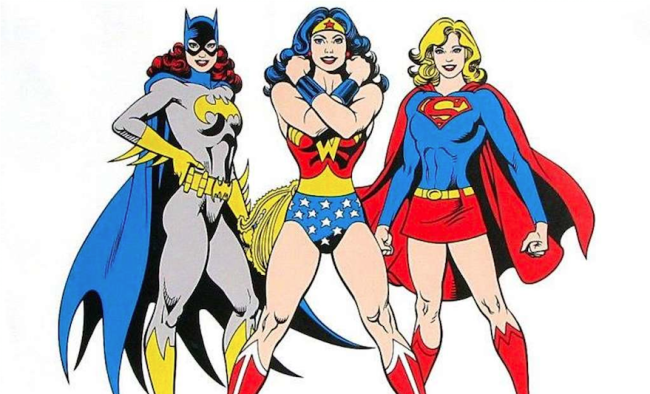
| Superman | 1938 | Wonder Woman | DC Comics – 1941 |
| Batman | 1939 | Batwoman | DC Comics – 1956 |
| Spiderman | 1962 | Spider-Woman | Marvel – 1977 |
| Hulk | 1962 | She-Hulk | Marvel – 1980 |
While one could argue that the delay in time between superhero creation and the establishment of a female counterpart is symbolic of patriarchal society, I would argue that the establishment of a hero like Batwoman, before the now cinematographically award-winning Spiderman is heavily symbolic of a conscious effort for female inclusion.
The crux of this debate however, lies in the definition of what a ‘superhero’ is, and how the earliest epic heroes relate to modern day superheroes in the same context. For me the most important trait when considering the demeanour of a (super)hero is the demand for moral goodness or having a strong moral compass that they can project onto others. It would be heavily ironic to have a superhero that was morally corrupt or who symbolised wrong-doing.
The idea of making someone ‘good’ on paper, and in the eyes of surrounding societies or readers, is a fundamental part of heroic literary history. Moral goodness in the ancient epics such as the Odyssey and the Aeneid lies, I would argue in obedience. While being incredibly powerful warriors themselves, ancient heroes are often instructed to do things, and are on occasion helped (or hindered) by their Gods. Therefore, while they are documented heroes, we acknowledge that they are perhaps much less powerful than the superheroes we imagine today. It may be for this reason that the Greek word for ‘hero’ places its initial emphasis on normality or humanity.
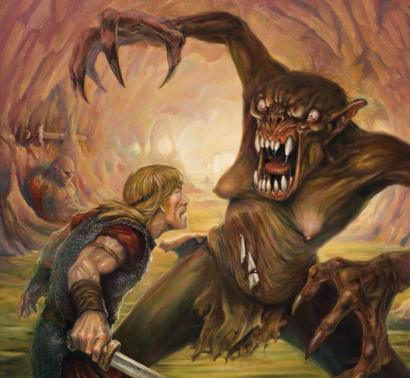
Moving away from Greece and Rome into the Medieval period, we find ourselves confronted with the one and only King of the Geats – Beowulf. Moral goodness here finds its roots predominantly in religious belief, as opposed to the pagan Gods of the Ancient World. Beowulf however, is a liminal hero, his character is written at a time where Britain was undergoing its Christianisation. We therefore see both pagan and religious strands within the epic. However, in light of the word ‘christianisation’, we see the disintegration of paganism, and must therefore stay true to the religious trajectory in which society is taking at the time of its composition. One of the monsters of this epic that Beowulf must defeat goes by the name of Grendel. Grendel is referred to as ‘kin of Cain’. Cain in the bible was guilty of fratricide, and was subsequently banished by the Lord. Condemning what would now be referred to as the ‘baddie’ of the poem on religious grounds, heavily suggesting that to be good at some point in literary history, one had to be pious, and therefore good in the eyes of your superior i.e. God. In the Medieval poems (Beowulf, and Sir Gawain for example) you become a hero by being a protagonist who outperforms his counterparts, perhaps completes a quest to unchartered territory, is faithful to the widely accepted moral code of the time, and is therefore ‘super’ or lifted above by a superior force, to a higher status.
The modern era poses a different, less clear cut type of moral goodness. Secularism has infiltrated the literary scene in accordance with its exponential, societal growth in the last 100 years. Therefore, the medieval root for moral goodness that lies in religion becomes increasingly irrelevant, and people are unable to relate to it in the same way. Looking at art forms with much beloved heroes such as Harry Potter or the Marvel Films, they appeal to a wider, and much more diverse audience in terms of age range, religion, occupation, gender etc. than works such as Beowulf, Chaucer’s Canterbury Tales, or Spenser’s ‘Faerie Queene’ that were being read and narrated by much smaller communities of people of the same religious outlook, and belief systems. The quest to remain morally good in the eyes of so many is something that is undoubtedly extremely difficult to achieve, as collective opinion on ‘goodness’ in the 21st Century is a pandaemonium of conflicting opinions.
Pinning this down would be next to impossible in a modern world. One could ascertain what a universal ‘moral goodness’ may look like – inclusivity? collective peace? absence of crime? Who do our modern protagonists, or we, as modern citizens, modern readers answer to? The normality required by the word ‘hero’ as established by the Greeks demands a level of relatability between hero and reader in order for man to appreciate the wonders of what it means to be a ‘super’man.
One man in the second half of the 19th Century decided to try and tackle this topic, Friedrich Nietzsche. He devised a philosophical thought which he named ‘Superman’ or in German ‘Übermensch’. This Superman was supposed to be a man elevated above society, who was able to justify the existence of the human race, a man able to compensate for the flaws of mankind. A rightful taboo today, the concept of the ‘Übermensch’ was unfortunately utilised by Adolf Hitler who twisted it into Nazism, changing the meaning of ‘superior man’ as an extension and justification for the common, universal man, to a ‘superior man’ in attempt to justify the eradication of what he deemed the ‘lesser’ man.
However, it must be remembered that the atrocities of the Holocaust are not what Nietzsche was foreshadowing, nor what he was writing for when establishing this philosophical train of thought.
A very small part of this literary theory resonates with the conflict between secularism and religion as a root for moral goodness in the development of superheroes. Nietzsche set out that this ‘Übermensch’ should be a “Caesar with Christ’s soul.” This idea marries together the two strands that literary and cinematic heroes have established for us (The Classical and the Christian). Nietzsche insinuates that the power of the utmost superman lies in the balance between a secular history and a religious present or vice versa depending on the time period being addressed.
Could a marriage between religion and secularism be the keystone for superheroes to exist in the future, while simultaneously acknowledging their historical roots, rather than straying from them due to a lack of collective agreement? Or, should we accept the world as increasingly secular and therefore morally incoherent adapt our heroes to fit the ever-changing society we live in?
 The World According To...