Quarantine and Lockdown have been the bane of everybody’s Covid-19 experience. Here are some ideas to pass the time that my friends, professors and I have engaged in over the course of lockdown. We hope you get as much enjoyment out of them as us.
I will be posting a Quarantine Series as follows (see below). I aim to do one every couple of days-1 week depending on uni prep work. Here are a list of categories ranging from fun, crafty activities to academic reading, board games to colouring books, and language learning to dress-making. As per usual click on the photo to be taken to the link you can purchase these items!! This post is Week 1 and so we will be discussing reading – how to get into it, how to broaden your cultural horizons, what books we recommend, specific websites you can use! Enjoy…
- Reading,
- Poetry (writing and reading),
- Art and Design (including adult colouring in – V. Exciting)
- Dress-making and knitting,
- Music/Writing Music,
- Language Learning,
- Mental Well-Being,
- Health and Fitness
- Make-Up/Hair-Dye
- Further Reading (for people who are avid readers, looking for different genres, cultures, or simply looking to expand their reading taste)
- Reading – Classics, Modern/Best-Sellers, International Lit.
Reading is something many of us simply do not have the time to do in the day. I know that I often find myself too tired to read in the evenings, or caught up in work and essay deadlines. However, it is also true that when starting reading for the first time in a while, it can be a bit overwhelming regarding knowing where to start. We all have different tastes in books, and as a student of literature almost half my personality is taken up by what I read (sad I know). For students of literature who love reading as much as I do, the literary canon is something you should definitely familiarise yourself with. However, the literary canon has fallen under immense scrutiny (rightfully so) for its nominal branding. While one can understand labels such as ‘The English Literary Canon’ or ‘The Chinese Buddhist Canon (大藏經)’ as they are specifically referring to a single and specific culture, one has to question more ‘universal’ labels such as ‘The Western Literary Canon’. This evidently insinuates that the West have a greater and more worthwhile body of literature. This is something we MUST endeavour to change as it encourages the very superiority complexity we are seeking to change. I feel that the recent Black Lives Matter protests have created the ideal circumstances to contest this point at a period of mass questioning and engagement with the topic. I am trying to read a wider variety of African/Asian/ and African-American Literature, and while I unfortunately cannot say that I am exempt from being, at least to some extent ignorant to these literary cultures by comparison to my own, I will include some of what I have read and enjoyed/the books on my reading list. I would love any recommendations (comment or email them to me) to help myself and others break the ice with a literary culture that is unfortunately a novelty for many students of the literary west.
Category 1: Classic Novels
a. English Literary Cannon
- Basically anything written by William Shakespeare! (my personal favourite plays are ‘Coriolanus‘ , ‘King Lear’, ‘Hamlet‘, and ‘Cymbeline‘

2. Jane Austen, ‘Emma’ – the adventures of a young girl who believes herself to be a matchmaker, and tries her hand pretty successfully in a ‘man’s world’. If you are a fan of the movie ‘Clueless’, that is based on ‘Emma’!

3. Mary Shelley, ‘Frankenstein’ – Victor Frankenstein attempts to reanimate a corpse to practice his passion for science. However, this has tragic consequences. Although the being is not innately malign, it becomes so after being rejected by his creator and by society. This book became a platform for artistic creativity, theatre, and film following its publication in 1816.

4. Anything by Charles Dickens – While many people (Including myself) are slightly put off by Victorian literature at times, thinking it is boring, dense, and depressing. Well, a lot of the time – you are right. However, Charles Dickens, author of ‘Oliver Twist’, ‘A Christmas Carol’, and ‘David Copperfield’. These three works have become major motion pictures, and theatrical entertainment for thousands of people all over the world. How can one appreciate these works fully without reading the pages in which their creativity was born? I do recommend giving Dickens a go – if it gets hard, think of singing ‘Where is Love’ or ‘Consider Yourself’ (plus, you get to sound clever afterwards).


6. George Orwell, ‘1984’ – Ironically written in 1948, ‘1984’, an absolute gem of English Literature. Unnerving yet an absolutely stunning work of art. Every english speaking person should read this.

Hidden away in the Record Department of the sprawling Ministry of Truth, Winston Smith skilfully rewrites the past to suit the needs of the Party. Yet he inwardly rebels against the totalitarian world he lives in, which demands absolute obedience and controls him through the all-seeing telescreens and the watchful eye of Big Brother, symbolic head of the Party. In his longing for truth and liberty, Smith begins a secret love affair with a fellow-worker Julia, but soon discovers the true price of freedom is betrayal.
George Orwell’s dystopian masterpiece, Nineteen Eighty-Four is perhaps the most pervasively influential book of the twentieth century. (Amazon Reviews)

b. African Literature and Best-Sellers
- Half of a Yellow Sun, Chimamanda Ngozi Adichie – Ugwu, a boy from a poor village, works as a houseboy for a university professor. Olanna, a young woman, has abandoned her life of privilege in Lagos to live with her charismatic new lover, the professor. And Richard, a shy English writer, is in thrall to Olanna’s enigmatic twin sister. As the horrific Biafran War engulfs them, they are thrown together and pulled apart in ways they had never imagined.
Chimamanda Ngozi Adichie’s masterpiece, winner of the Orange Prize for Fiction, is a novel about Africa in a wider sense: about the end of colonialism, ethnic allegiances, class and race – and about the ways in which love can complicate all of these things.


2. Girl, Woman, Other, Bernadine Evaristo – WINNER OF THE 2019 BOOKER PRIZE (Absolutely recommend) From Newcastle to Cornwall, from the birth of the twentieth century to the teens of the twenty-first, Girl, Woman, Other follows a cast of twelve characters on their personal journeys through this country and the last hundred years. They’re each looking for something – a shared past, an unexpected future, a place to call home, somewhere to fit in, a lover, a missed mother, a lost father, even just a touch of hope . . .(Amazon reviews)


3. Things Fall Apart, Chenua Achebe – One of the BBC’s ‘100 Novels That Shaped Our World’ – Okonkwo is the greatest wrestler and warrior alive, and his fame spreads throughout West Africa like a bush-fire in the harmattan. But when he accidentally kills a clansman, things begin to fall apart. Then Okonkwo returns from exile to find missionaries and colonial governors have arrived in the village. With his world thrown radically off-balance he can only hurtle towards tragedy. (Amazon Reviews)


4. ‘Between the World and Me,’ Ta-Nehisi Coates – Written in the form of a letter to his 14 year old son, attempting to explain racial problems in America.
A bold and beautifully written exploration of America’s fraught racial history and its contemporary echoes that will redefine wider understanding of race and the roots of American identity. (Amazon Review)


c. Chinese Buddhist Literary Canon
I have to hold my hands up here and admit that I have read very little Chinese literature, but I have started reading ‘The Chinese Literary Canon: Exploring 3000 Years of History and Culture’ and it is absolutely brilliant. I completely recommend it to get a broad perspective on Chinese literary history. As I read more I will add to this section.


Category 2: Modern/International Best-sellers
- Never Let Me Go, by Kazuo Ishiguro (Booker Prize Winner) – The gripping and slightly dark story of a boarding school called Hailsham. Initially the school appears entirely normal and the students are well cared for. However, no pupil is allowed any contact with the outside world nor do they have any idea of what is in it. It is only when the protagonist (Kathy) and her friends leave school that they realise the dark secret behind Hailsham. Absolutely gripping adventure where we are kept as in the dark as the characters.


2. Middlesex, Jeffrey Eugenides – (Pulitzer Prize Winner, Voted 4.01 stars on goodreads after 573,413 ratings V. Impressive) an absolutely fabulous tale of a young hermaphrodite named Cal who battles with her ambiguous sexuality. S/He recounts her entire family history recalling on life in Greece, the burning of Smyrna, and then their arrival in the USA. This novel perfectly mixes the beauty and natural art of classics and ancient history with a modern exploration of the diversity of gender and sexuality. A personal favourite!! I loved this perspective so much, I used it for my Pre-U coursework.


Goodreads Synopsis (in case mine missed anything): Middlesex tells the breathtaking story of Calliope Stephanides, and three generations of the Greek-American Stephanides family, who travel from a tiny village overlooking Mount Olympus in Asia Minor to Prohibition-era Detroit, witnessing its glory days as the Motor City and the race riots of 1967 before moving out to the tree-lined streets of suburban Grosse Pointe, Michigan. To understand why Calliope is not like other girls, she has to uncover a guilty family secret, and the astonishing genetic history that turns Callie into Cal, one of the most audacious and wondrous narrators in contemporary fiction. Lyrical and thrilling, Middlesex is an exhilarating reinvention of the American epic.
4. Beloved, Toni Morrison (Pulitzer Prize Winner) –
Goodreads Synopsis: Winner of the Pulitzer Prize, Toni Morrison’s Beloved is a spellbinding and dazzlingly innovative portrait of a woman haunted by the past.
Sethe was born a slave and escaped to Ohio, but eighteen years later she is still not free. She has borne the unthinkable and not gone mad, yet she is still held captive by memories of Sweet Home, the beautiful farm where so many hideous things happened. Meanwhile Sethe’s house has long been troubled by the angry, destructive ghost of her baby, who died nameless and whose tombstone is engraved with a single word: Beloved.
Sethe works at beating back the past, but it makes itself heard and felt incessantly in her memory and in the lives of those around her. When a mysterious teenage girl arrives, calling herself Beloved, Sethe’s terrible secret explodes into the present.

Combining the visionary power of legend with the unassailable truth of history, Morrison’s unforgettable novel is one of the great and enduring works of American literature.
5. Where the Crawdads Sing, Deila Owens – Absolutely dazzling story! Rated 4.48 stars on Goodreads after 783,809 ratings . I definitely recommend this one. Story of a girl names Kya Clark or ‘Marsh Girl’ who haunts Barkley Close in North Carolina. When heart throb of the novel is found dead all fingers point to Kya. However, Kya is sensitive and intelligent as found her friends and teachers in nature. One day she opens herself up to a new lifestyle when two men show interest in her natural and wild beauty – until the unimaginable happens.


6. The Beekeeper of Aleppo, Christy Lefteri –
Nuri is a beekeeper; his wife, Afra, an artist. They live a simple life, rich in family and friends, in the beautiful Syrian city of Aleppo – until the unthinkable happens. When all they care for is destroyed by war, they are forced to escape.
As Nuri and Afra travel through a broken world, they must confront not only the pain of their own unspeakable loss, but dangers that would overwhelm the bravest of souls. Above all – and perhaps this is the hardest thing they face – they must journey to find each other again. (Amazon Synopsis)


Category 3: European Literature
- Master and Margarita, Mikhail Bulgakov (Probably in my top 3 favourite books of all time) However, the plot is extremely complex and full of little labyrinths which is why I love it. As a chronically dyspraxic being, I am going to defer to Amazon’s authority when trying to summarise it: “The devil makes a personal appearance in Moscow accompanied by various demons, including a naked girl and a huge black cat. When he leaves, the asylums are full and the forces of law and order are in disarray. Only the Master, a man devoted to truth, and Margarita, the woman he loves, can resist the devil’s onslaught.” For history lovers, the world of ‘Master and Margarita’ paints an allegory of Stalinist Russia which provides a gripping perspective of art and culture in times of intense repression.


2. Crime and Punishment, Dostoyevsky – Raskolnikov wanders around the streets of St. Petersburg seemingly with very little aim or purpose. However, he then commits an act of murder without explanation, and subsequently without regret. In his own head, Raskolnikov conjures up an image of himself as a great and noble man serving some higher power. However, as he chased down by police, this image becomes tainted by the voice of his own conscience. Inversely, it is only a prostitute (a profession deemed immoral at the time period) named Sonya who seems able to offer him the redemption to appease his conscience.


3. 100 years of Solitude, Gabriel Garcia Marquez (Latin American but written in Spanish so I guess that sort of counts) The brilliant, bestselling, landmark novel that tells the story of the Buendia family, and chronicles the irreconcilable conflict between the desire for solitude and the need for love—in rich, imaginative prose that has come to define an entire genre known as “magical realism.” (Goodreads summary, rated 4.08 stars after 727,017 ratings )


4. The Trial, Franz Kafka –
A really interesting take on the values of human crime and punishment (pun not intended) and how one does not always correlate to the other. Kafka explores how sometimes one commits a crime and gets away with it, other times we do not but are put wrongly in the spotlight. Josef K. (a bank clerk) is condemned for a crime did not commit. Despite trying to defend himself all he seems to do is open a crevasse of unknowns and uncertainty. A true revelation of the futility and uncertainty of human nature.
“It offers everything and confirms nothing” – Albert Camus


Bringing us nicely onto our next author…
5. L’étranger (The Outsider), Albert Camus – «Quand la sonnerie a encore retenti, que la porte du box s’est ouverte, c’est le silence de la salle qui est monté vers moi, le silence, et cette singulière sensation que j’ai eue lorsque j’ai constaté que le jeune journaliste avait détourné les yeux. Je n’ai pas regardé du côté de Marie. Je n’en ai pas eu le temps parce que le président m’a dit dans une forme bizarre que j’aurais la tête tranchée sur une place publique au nom du peuple français.» (Goodreads)
Et pour les gens qui ne parlent pas français (and for the people who don’t speak french)…
"When the bell rang again, the door of the box opened, it was the silence of the room which rose towards me, the silence, and this singular feeling that I had when I noticed that the young journalist looked away. I did not look at Marie's side. I did not have time because the president told me in a bizarre form that I would have my head severed in a public place on behalf of the French people. ” (Goodreads Translation).


Useful Websites for maintaining reading:
- Obviously I love reading and so I will be posting about reading again for sure so stay tuned or recommend books to me!! You can send any recommendations or opinions on a book directly to me in the sumbissions/suggestions tab. I’d love to hear from you.
- https://www.goodreads.com/ is one of my faves. Sign up for free and enter the beautiful and vast world of books. With a synopsis and rating of all books ever basically, you can never go too wrong in making a decision about what to read.
- https://www.waterstones.com/campaign/new-books Waterstones is my favourite rainy afternoon. The website is vast with some really helpful navigators so you can get exactly what you’re looking for.
Beautiful reading spots and shops:
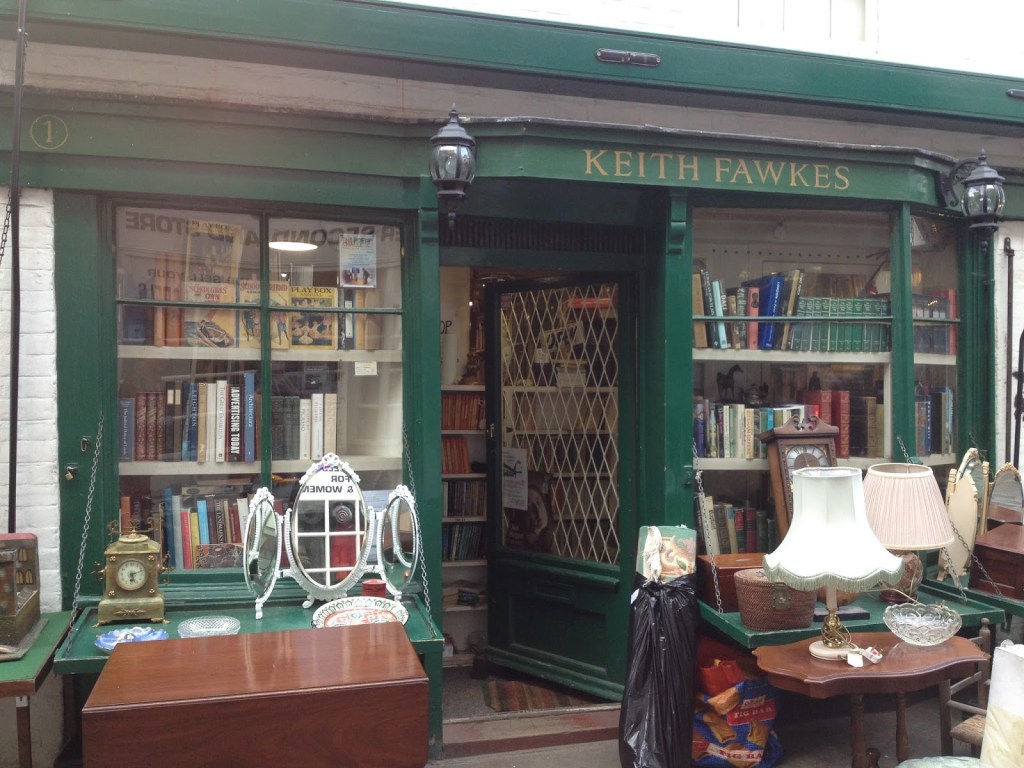
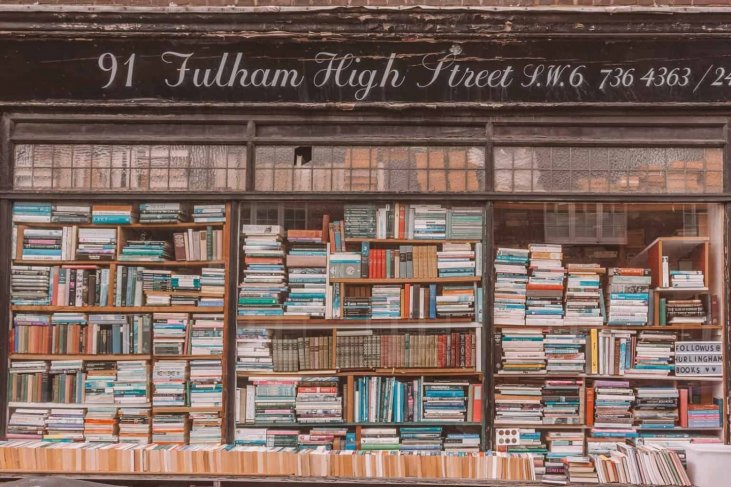
- Second hand book shops are the love of my life. I have found some real gems over the years in second-hand shops. I found a first edition ‘Alice Through The Looking-Glass’ which was still priced in shillings, A map of Paris from when the metro was first built, and a wartime ration book amongst many others. I love old-books because they have a story to tell. As much as a crisp copy of a book is immensely satisfying, an old book had stories of hundreds of years sometimes, the dust of all its owners, and a musty smell that sends your senses into time travel. The books are normally cheaper as well if you’re shallow. Here are my 2 favourite and go-to second hand book shops…
Keith Fawkes, Hampstead
2. Hurlingham Books, Fulham
I hope this has helped and I’d love to hear how you go on!! Happy Reading…<3
 The World According To...