“When, however, one reads of a witch being ducked, of a woman possessed by devils, of a wise woman selling herbs, or even of a very remarkable man who had a mother, then I think we are on the track of a lost novelist, a suppressed poet, of some mute and inglorious Jane Austen, some Emily Bronte who dashed her brains out on the moor or mopped and mowed about the highways crazed with the torture that her gift had put her to. Indeed, I would venture to guess that Anon, who wrote so many poems without signing them, was often a woman.”
Virginia Woolf, ‘A Room of One’s Own’
Although one frequently defends the view that the world of the 21st Century surmounts all its predecessors when it comes to female empowerment, ancient and medieval literature is increasingly making us question whether this opinion is justifiable, or simply stems from our own arrogance. It is no secret that women have been judged as the inferior sex throughout history – the reasons for this, however, remain largely unexplained and under-explored, particularly from a secular standpoint. While it is easy to shirk blame onto religion when you do not have a faith, or to absolve yourself of personal prejudice by confining it to antiquity, we must turn the issue on its head and look at it as a global prejudice rather than a personal one. I am seeking to explore the representation of women in literature through different global histories to try and alter the perspective on global feminism in the modern world.
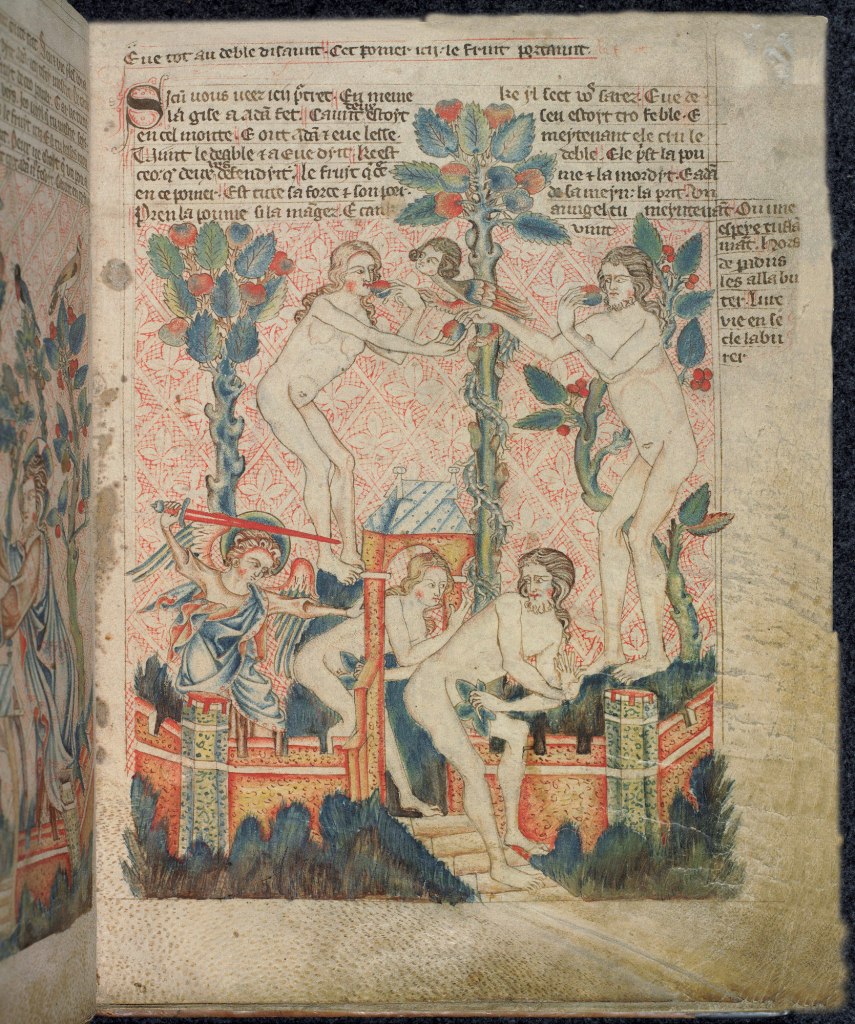
There is a lot to be said for such prejudices originating in religion. When it was Eve as opposed to Adam who ate the fruit in the Garden of Eden a physical manifestation of women’s ‘weakness’ and ‘lack of will power’ was born in the Holy Bible, a text that has been largely responsible for the creation and preservation of a hierarchy of the sexes. John Milton’s ‘Paradise Lost’, a transformative literary (and Christian) epic of the 17th Century that seeks to ‘justify the ways of God to men’ to ordinary learners, condemns Eve as being “from sin and blame entire” (9.291-2). The reassertion of church and monarchy, following the English Regicide in 1649 is perhaps to blame for the persistence of such ideas of female inferiority in the post-enlightenment centuries. However, the sufferings of Christ himself could perhaps indicate some sense of sexual equality within Christianity. Both men and women must abide by the same law, obey the same commandments in order to enter God’s kingdom in heaven. While spiritually men and woman may be equal, a temporal hierarchy is imposed upon them. It is people’s interpretations of the Gospels coupled with the megalomania embedded in human nature that has moulded religion into something oppressive as opposed to unifying.
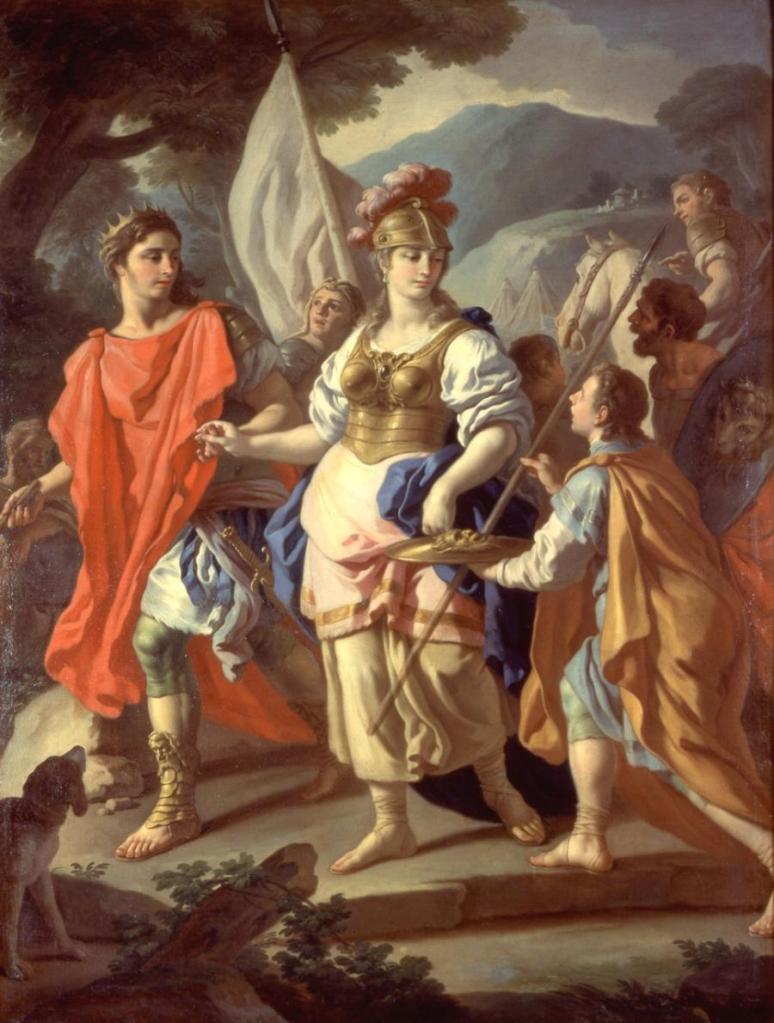
The last two centuries have seen a major increase in secularism worldwide. With Communism prevailing most notoriously in the USSR from 1917 until its collapse in the 90s, but also strongly present in Castro’s Cuba and Mao’s China, the world saw its largest digression from the religious sphere of influence. In addition, France has declared itself secular to the extent that no religious icons may be shown in public. In light of the aforementioned Milton quotation, perhaps one could expect that with the departure from religious ideology, there could be an end to the intense theological repression of women. One must only look to the ‘The Odyssey’, ‘The Iliad’, and ‘The Aeneid’ from the ancient worlds of Greece and Rome to see that both women and men were deified equally. This begs the question as to why in an ancient or pagan society does the absence of Christianity bring about equality, but the modern world has decided to keep elements of oppression despite becoming increasingly secular. Camilla (‘The Warrior Princess’) in ‘The Aeneid’ is constantly depicted in battles alongside her sister fighting for their family, the Volscian tribe. The images of literary heroism that are found in battle isolate the modern woman from such a depiction as they may not even fight on the front line in any military service. It becomes increasingly apparent that the ideal of the admirable and brave women of the classical world is not attainable for the women of the 21st century.
According to a survey conducted by the Independent in 2016, although touched by Christianity around the years 999/1000, Iceland now finds itself among the top 6 ‘most convinced atheist’ or secular countries in the world. Interestingly, we look to the Ancient, Pagan Nordic and Viking civilisations for some of the earliest examples of female integration within the contemporary world of the time. ‘The Sagas of Icelanders’ are family stories narrated, passed down through aural tradition, and later written down and preserved by the first Icelandic settlers. They hold great resonance as both historical sources and literary works and this is largely down to their radical outlook on women. They gave rise to the concept of the ‘influential woman’ which although present in both the ancient and modern worlds, still remains in many ways a taboo.
The Icelandic Sagas emerged at a time of immense cultural and religious change across Europe with the rise of Christianity. While we applaud the emergence of the influential woman, we also learn that such women are only those who are overtly more masculine in demeanour. To use the words of the Sagas themselves, the men lived in ‘the world of… trade, politics, and law’. However, Giselle Gos enlightens, frequent “examples of a wise woman habitually engaging in social and judicial affairs.” Her research demonstrates that the idiosyncrasy of the Icelandic Sagas lies in the psychological similarity between men and women. The notion of a ‘wise woman’ is defined by an ability to think on a par with her male counterpart. Such psychological unity is embodied by protagonists such as Gudrid Thorbjarndottir. She states, “I have neither magical powers nor the gift of prophecy…these are events in which I wish to take no part because I am a Christian woman.” We see here the “universalization” of a female mind-set moving away from an individual superstition towards a collective religious identity. She is described as being “more than capable of keeping up with the intellectual and philosophical conversations of men.” Further examples of this exist in Gudrid Thorbjarndottir’s worldly experience. Born in 980, and hero of the ‘Saga of Greenlanders’, Gudrid, being among the few well-travelled women of the Sagas, is one of the most influential and controversial women of early European literature having more experience than many of her male counterparts. Perhaps represented in the modern world by someone like Amelia Earhart, Gudrid is the alleged founder of the Americas and embarks on pilgrimages across the South of Iceland, and on further voyages from Greenland to Norway, outliving her three husbands in the process.
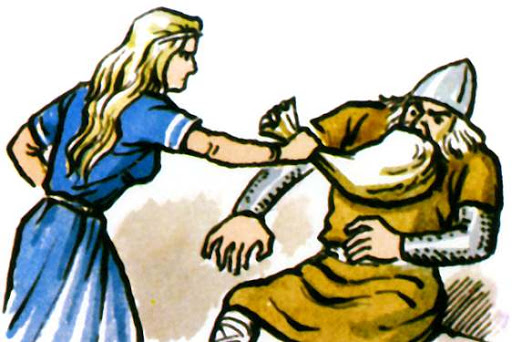
The Sagas, being largely written by men, do not refrain from voicing female discontent. This exacerbates the credibility of female sufferings making them among the most feminist works of world literature. It is disheartening that so much rudimentary, comparatively modern literature took such a catastrophic leap backwards in its vision of the female protagonist. It is evident that the Icelandic women remained unscathed by theological ridicule and indeed benefited from the effects of Christianity, marking a stark contrast with those of the Anglo-Saxons and the majority of practicing Europe.
The most radical of women’s rights within the Nordic world was their right to attend their national parliament or ‘Thingvellir’. Attending parliament was a national right by law in 900 AD. It is therefore baffling that it took women in the UK until 1928 to achieve the vote on the same grounds as men. It is true that some were granted the vote in 1918, however, these were only women over 30 with property in their name which excluded the majority of women in the country. It is equally striking that it is only with radical change that women in the modern world were given equal rights. It is often only with the absence of men that women were able to prove themselves not to be the ‘weak’ or ‘hysterical’ creatures they were assumed to be. The First World War saw the loss of almost an entire generation of young men. Women were subsequently recruited to fill the jobs of conscripted men, and it was only then that they were deemed respectable enough to gain the vote. Furthermore, it was only with the baby boom of the post Second World War era that women were re-granted the right to their own bodies (men were able to take women for a hysterectomy until 1950). The contrast between an ancient society and events occurring less than 100 years ago is extreme, and in many instances beyond explanation. The Suffragettes founded their principles on ‘deeds not words’. While frequently debated, the absence of words pulls on the historic ideology that women should be seen and not heard. By ironically adopting this as a slogan for female suffrage, there is a missile positioned at the persistence and unnecessary stoicism of female oppression.
The Icelandic Sagas are unprecedented and undoubtedly unique in their approach to the representation of the role of women generally. Furthermore, The Sagas examine the rise of the influential woman and explore a previously un-encountered literary territory of a woman with power.
That being said, it seems as though a regression has since occurred in Iceland as well. The early months of 2019 saw a large number of protests within Iceland in which women marched out of their workplaces after having completed only 73% of the working day, the exact percentage of gender pay gap currently present in Iceland. It appears that the co-existence of the women of the Sagas ‘was later eclipsed by the emerging Viking patriarchy’ (Giselle Gos) and has since been lost throughout the centuries as Iceland came to ‘modernise’ itself. While typically modernising is considered a positive thing with regard to industry, infrastructure etc., in these circumstances we must consider whether to be ‘modern’, especially as a woman, means to accept a level of prejudice.
In light of this, only a shocking 1 in 30 English speakers knew that it was in fact the Vikings that beat Christopher Columbus to the ‘New’ World by almost 500 years. All the more shocking is 1 in 2.3 million know that it was in fact a woman under the command of Leif Erikson that ‘founded’ the Americas. Why is it Columbus who is enshrined in history textbooks as the founder of the modern world? History, in what would be a most hypocritical act anathema to its function as a record, appears to have censored itself. It is Virginia Woolf’s ‘A Room of One’s Own’ cited at the top of the article, published in 1929 as one of the first overtly feminist satires that deals with sexual disparity in the modern world, and questions such absurdity:
“I told you in the course of this paper that Shakespeare had a sister; but do not look for her in Sir Sidney Lee’s life of the poet. She died young—alas, she never wrote a word. She lies buried where the omnibuses now stop, opposite the Elephant and Castle” – Virginia Woolf
The ‘birth of the novel’ or cultivation of the Victorian literary era marks a fulcrum point, separating the literary past from the societal present. Academics generally date this time to around 1800. We must beg the question as to why the divide falls here. What is it that academics see as distinctly more modern about this period? If we take modern to mean new, upcoming and up to date, why do we class the removal of identity as something belonging to the modern world? Why were the writers Mary Anne Evans (George Eliot), Charlotte, Emily, and Anne Brönte (Currer, Ellis and Acton Bell), Nelle Harper Lee (Harper Lee) whose works define English and American Literature forced to write under pseudonyms to get their work published? Famous author J.K. Rowling still actively chose to write under the pseudonym Robert Galbraith until recent years. The shift from women being represented in literature as equal to men in most fields to being forced to assume a male identity in order to publish literature marks a clear regression in the way that women are societally perceived and, by extension, further reinforces the gap between reality and their representation in literature.
“Different though the sexes are, they inter–mix. In every human being a vacillation from one sex to the other takes place, and often it is only the clothes that keep the male or female likeness, while underneath the sex is the very opposite of what it is above. ” (Virginia Woolf, Orlando) – My favourite book!
The Ancient Egyptian scriptures have given rise to the concept of ‘ma’am’ which translates as ’synthesis and balance in every aspect of life’. Barbara Patterson sheds light on this ideology by claiming that ‘within the patriarchy, women exercised considerable power and independence’ and were inevitably able to rule with figureheads such as Cleopatra. Although not entirely ideal, the Egyptians dismissed sex and judged a person – male or female – based on their social class. Much like the Greeks and Romans, the Egyptians worshiped both male and female gods and both were written about by scribes with equal weight. Women were deemed to be ‘capax’ or competent within literary teachings, and had the right to an adoption in their own name, participation in legal contracts as well as the buying and selling of property. These are all things that when transitioning from BC to AD were for unknown reasons, removed from society.
The world of Shakespeare holds an interesting role for women. While many of Shakespeare’s female characters – for instance Portia in ’The Merchant of Venice’, Imogen in ‘Cymbeline’ and Viola in ‘Twelfth Night’ must disguise themselves as men in order to to outwit their male counterparts in a public domain, he persistently casts women in integral intellectual roles within his plays. Shakespeare carefully selects the soothsayers or ‘truth-tellers’ for most of his plays to be women, in keeping with the fortune-tellers of the ancient worlds. This is seen in the three witches of ‘MacBeth’ who, although vulgar in appearance, are cast to relay accurately the truth of MacBeth’s fate, however ugly it may be.
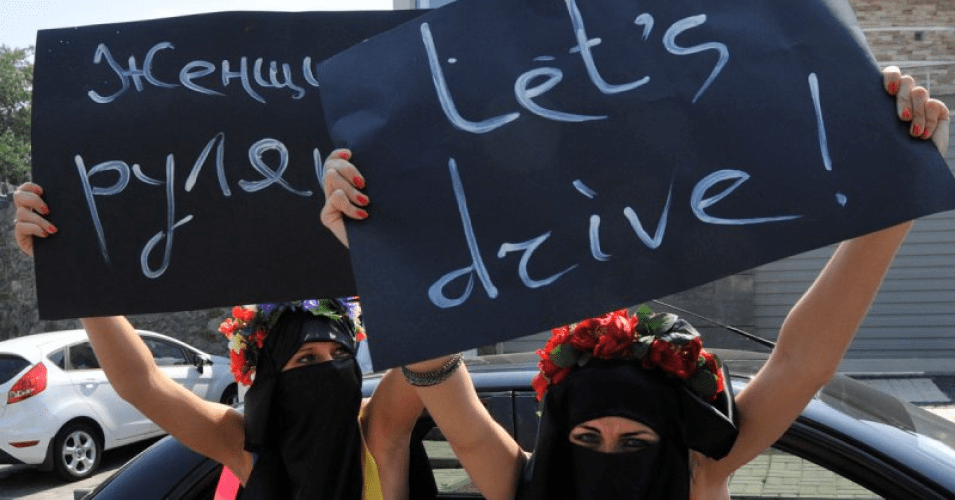
The final question one must consider with regard to women’s role both in literature and in society past or present, is the extent to which the literary representation of women lines up with the perception of the contemporary woman at the time. While the ‘Sagas of Icelanders’ are literary, their roots are based in historical accuracy, therefore the margin for miscommunication is slim. However, the diverse worlds of the 20th and 21st centuries give rise to powerful women such as Margret Thatcher, Michelle Obama, Theresa May and Hillary Clinton who have proved themselves more than a match for their male political counterparts. On the other hand, there are equally women who remain oppressed. Women in the Middle Eastern region of Saudi Arabia were only permitted to drive in June 2018, something that – although legal – is still frowned on today. The plethora of women that exist in the ‘modern world’ reside in both opposing camps – those who suffer oppression based on their sex and those who thrive in top professions. Therefore, we must consider that ‘modern’ does not necessarily guarantee a positive connotation. In this way, the feminism and female equality of the literary past marks an accurate representation of female aspiration albeit not an accurate account of their social manifestation. One gets a more honest sense of female aspiration through literary history as it has the power to expose clandestine female desires than one gets in modern society. However, many of the societal prejudices of the time that women silently endured historically, the modern world allows women to voice freely today. Therefore, while modern society is arguably the most feminist it ever has been, literary history provides a clearer trajectory regarding the battle for equality and the fulfilment of female aspiration.
Sophie Boehler
Books and Resources Cited: Click on the book to be directed to where you can buy them should you be interested
1. A Room of One’s Own, Virginia Woolf


2. The Icelandic Sagas


2a. In our Time Podcast, The Icelandic Sagas
3. Paradise Lost, John Milton


4. Women in Ancient Egypt, British Museum Press


5. Orlando, Virginia Woolf


6. Medieval Women, Henrietta Leyser


7. In our Time Podcast – Women in Enlightenment Science
8. HBO Documentary on Saudi Women’s Driving School (2019)
 The World According To...