The World According To ‘Superheroes – Past, Present, and Future’

Why our modern day superheroes may not be so different from those of the medieval past
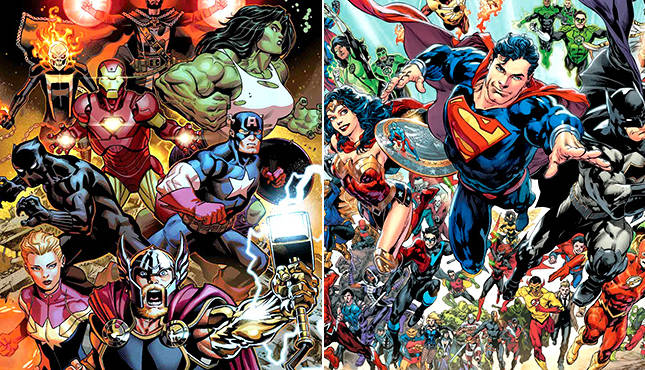
https://411mania.com/movies/marvel-v-dc-whos-your-favorite/

What first comes to mind when someone says the word ‘superhero’? Between 2016-2026, superhero movies generated an estimated $30 billion in box office revenue alone. We credit Marvel and DC comics with the innovation behind the characters we love, those who are seemingly human, but who have the ability to metamorphose into the otherworldly, or the supernatural. However, while Martin Goodman and Malcom Wheeler Nicholson may be the original masterminds behind the modern day characters we know and love, ‘the superhero’ is a concept that far precedes their work or imagination.

In a modern world, the concept of the ‘superhero’ has emerged as a secular superior to humankind, in some instances being cast as a God-like figure within a given community. ‘Super’ in Latin meaning ‘over’ or ‘above’, and ‘hero’, deriving from the Greek ‘definition’hērōs’ referring to a ‘demigod’ or ‘protector’.

This concept has clearly captured the eye of creatives, and film directors throughout the modern world. The conflicting concept of a character blending into normality, while simultaneously having something distinct about them has a central place in the superhero archetype. Peter Parker leads a relatively normal life before being bitten by a genetically altered spider. The Incredibles family are forced into civilian life during a superhero ban, Bruce Wayne lives a civilian lifestyle before his parents are killed. It ironically would appear that a large part of the process of becoming a hero, in reality emphasises a level of humanity and normality at its foundation. There is a prerequisite of self-identification between the hero and the reader or the viewer, we need to be able to recognise a level of ourselves in them.

While linguistically the superhero world may demand some normality, superhero history seems to conflict with social context of the time of its creation. When we consider the argument that superheroes have their linguistic significance in Ancient Greek and Latin, in conjunction with the superhero as a descendent of God, is there something to be said for there being a greater change between the ancient and medieval worlds, than the ancient world and 21st Century?

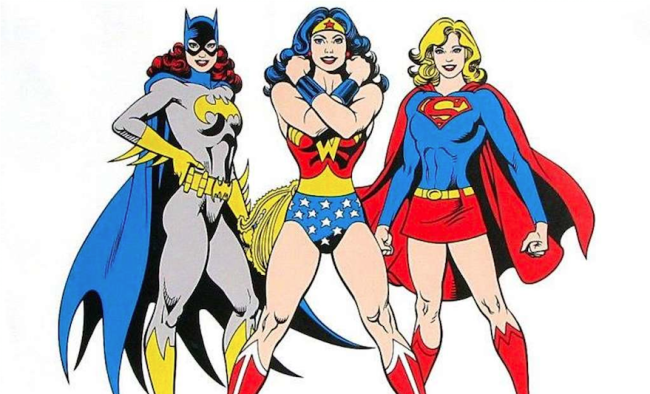
Well, the Ancient World was pagan up until the Christianisation of Europe between 380 AD – almost the 15th Century with the Baltic Christianisation. When we consider England today, most people wear a label of secularism, but perhaps more specifically, the absence of Christianity as a dominant belief system. The pagan nature of ancient society encouraged polytheism. These Gods were both male and female. In this sense we see women being deified in the same way as men. Therefore, when we consider women as strong protagonists in medieval heroes through to modern day ‘superheroes’, it is refreshing to see a similar platform increasingly being created for women as for men.

Superhero NameDate CreatedSuper-heroine Equivalent Date Created
Superman1938Wonder WomanDC Comics – 1941
Batman1939BatwomanDC Comics – 1956
Spiderman1962Spider-WomanMarvel – 1977
Hulk1962She-HulkMarvel – 1980

While one could argue that the delay in time between superhero creation and the establishment of a female counterpart is symbolic of patriarchal society, I would argue that the establishment of a hero like Batwoman, before the now cinematographically award-winning Spiderman is heavily symbolic of a conscious effort for female inclusion.
https://www.girltalkhq.com/dc-comics-marvel-their-inherent-female-superhero-problem-is-it-improving/

The crux of this debate however, lies in the definition of what a ‘superhero’ is, and how the earliest epic heroes relate to modern day superheroes in the same context. For me the most important trait when considering the demeanour of a (super)hero is the demand for moral goodness or having a strong moral compass that they can project onto others. It would be heavily ironic to have a superhero that was morally corrupt or who symbolised wrong-doing.

The idea of making someone ‘good’ on paper, and in the eyes of surrounding societies or readers, is a fundamental part of heroic literary history. Moral goodness in the ancient epics such as the Odyssey and the Aeneid lies, I would argue in obedience. While being incredibly powerful warriors themselves, ancient heroes are often instructed to do things, and are on occasion helped (or hindered) by their Gods. Therefore, while they are documented heroes, we acknowledge that they are perhaps much less powerful than the superheroes we imagine today. It may be for this reason that the Greek word for ‘hero’ places its initial emphasis on normality or humanity.

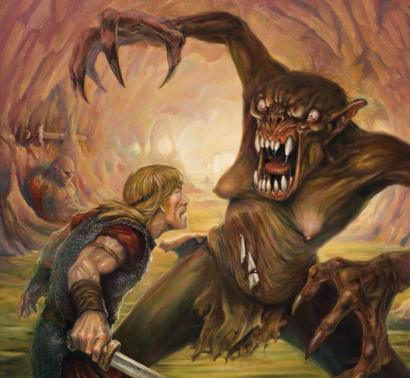
Moving away from Greece and Rome into the Medieval period, we find ourselves confronted with the one and only King of the Geats – Beowulf. Moral goodness here finds its roots predominantly in religious belief, as opposed to the pagan Gods of the Ancient World. Beowulf however, is a liminal hero, his character is written at a time where Britain was undergoing its Christianisation. We therefore see both pagan and religious strands within the epic. However, in light of the word ‘christianisation’, we see the disintegration of paganism, and must therefore stay true to the religious trajectory in which society is taking at the time of its composition. One of the monsters of this epic that Beowulf must defeat goes by the name of Grendel. Grendel is referred to as ‘kin of Cain’. Cain in the bible was guilty of fratricide, and was subsequently banished by the Lord. Condemning what would now be referred to as the ‘baddie’ of the poem on religious grounds, heavily suggesting that to be good at some point in literary history, one had to be pious, and therefore good in the eyes of your superior i.e. God. In the Medieval poems (Beowulf, and Sir Gawain for example) you become a hero by being a protagonist who outperforms his counterparts, perhaps completes a quest to unchartered territory, is faithful to the widely accepted moral code of the time, and is therefore ‘super’ or lifted above by a superior force, to a higher status.
https://www.bbc.co.uk/news/uk-england-suffolk-43045874

The modern era poses a different, less clear cut type of moral goodness. Secularism has infiltrated the literary scene in accordance with its exponential, societal growth in the last 100 years. Therefore, the medieval root for moral goodness that lies in religion becomes increasingly irrelevant, and people are unable to relate to it in the same way. Looking at art forms with much beloved heroes such as Harry Potter or the Marvel Films, they appeal to a wider, and much more diverse audience in terms of age range, religion, occupation, gender etc. than works such as Beowulf, Chaucer’s Canterbury Tales, or Spenser’s ‘Faerie Queene’ that were being read and narrated by much smaller communities of people of the same religious outlook, and belief systems. The quest to remain morally good in the eyes of so many is something that is undoubtedly extremely difficult to achieve, as collective opinion on ‘goodness’ in the 21st Century is a pandaemonium of conflicting opinions.

Pinning this down would be next to impossible in a modern world. One could ascertain what a universal ‘moral goodness’ may look like – inclusivity? collective peace? absence of crime? Who do our modern protagonists, or we, as modern citizens, modern readers answer to? The normality required by the word ‘hero’ as established by the Greeks demands a level of relatability between hero and reader in order for man to appreciate the wonders of what it means to be a ‘super’man.

One man in the second half of the 19th Century decided to try and tackle this topic, Friedrich Nietzsche. He devised a philosophical thought which he named ‘Superman’ or in German ‘Übermensch’. This Superman was supposed to be a man elevated above society, who was able to justify the existence of the human race, a man able to compensate for the flaws of mankind. A rightful taboo today, the concept of the ‘Übermensch’ was unfortunately utilised by Adolf Hitler who twisted it into Nazism, changing the meaning of ‘superior man’ as an extension and justification for the common, universal man, to a ‘superior man’ in attempt to justify the eradication of what he deemed the ‘lesser’ man.

However, it must be remembered that the atrocities of the Holocaust are not what Nietzsche was foreshadowing, nor what he was writing for when establishing this philosophical train of thought.

A very small part of this literary theory resonates with the conflict between secularism and religion as a root for moral goodness in the development of superheroes. Nietzsche set out that this ‘Übermensch’ should be a “Caesar with Christ’s soul.” This idea marries together the two strands that literary and cinematic heroes have established for us (The Classical and the Christian). Nietzsche insinuates that the power of the utmost superman lies in the balance between a secular history and a religious present or vice versa depending on the time period being addressed.

Could a marriage between religion and secularism be the keystone for superheroes to exist in the future, while simultaneously acknowledging their historical roots, rather than straying from them due to a lack of collective agreement? Or, should we accept the world as increasingly secular and therefore morally incoherent adapt our heroes to fit the ever-changing society we live in?
 

Poetry: Learned Behaviour

https://fineartamerica.com/featured/crashing-waves-in-florida-virginia-potter.html

“Let Us make man in Our image, according to Our likeness; and let them rule over the fish of the sea…and over every creeping thing that creeps on the earth.” Genesis 1:26-27

Sand lies still.
Untouched, a patent beauty.
Wave thunders, pressing himself across the ocean, always seeking, expecting.
He crashes over her, smothering her, wetting her.

Fulfilling his duty, he droops, flimsy, and dies at her feet.
Upon his death a new man births himself from her.
His journey is a predetermined one as he crashes harder, faster, crueler.
She does not fight, she does not struggle.
Instead, she tries to cry, but she is already covered in his water, and they are silenced..

At times, Tide must draw himself away, and she lies exposed.

Her patent beauty under thick sludge, her stillness no longer peaceful but petrified.
He retreats his body, and leaves her wealthy, swimming in jewels, corals, shells, expensive fish.

A transactional ‘love’, a compensation…?
They gleam on her broken body, she shimmers so she must be beautiful, and she is his.
She lies there nude, awaiting him again –

Now she cries, but she never heals.
For though we see her, we let the tide come in again.
She cries to us but we are deafened by his breaking.

We take photos of her.
We walk on her too, we smother her too.
She suffocates under him, but he continues, we continue.
He burrows pits in her body leaving her open and bleeding.
But she is still soft and curvy, and her breasts still fit his crest, and she is still shiny, and she is still his for the taking.

She still does her job. The one nature left for her.

One day she asked Sun to place a mirror of light on her body.
He saw himself, he saw his eyes as he came to shore.
His crest fell short, he missed her.

The wetness now his tears, the new drought her first smile – she asked him dryly, harshly:

“But why this time do you stop?

His quivering lip, his hateful reflection stared back at him.
One of four elements, now a plague,
Transformed, galloping apocalyptically to destroy a counterpart.

“my foam, my white rider, a smothering pestilence!”

His hand trembling, scared to touch the woman he had previously taken freely.
He cried, he screamed in agonising apology…

You too are man ; You are man, we forced your woe!
It echoed ferociously, pricking the ears of all the world.

The wind broke, the sails dropped, the sea was calm, the fog lifted,
And we could see.

Sea now played with Sand.
They flirt, they flit, they dance and sing together.

She breaks his tempestuous waves with her strength.

Sand lies still.
He and She ; Sand and Sea
Together –

They are everyman.

Poetry: Ode to Gerard Manley Hopkins

I sent nightshade to poison dusk
with the embers of a candlestick.
And wounded in the darken’d musk,
A Nightingale sparked a fragile wick.

It rattles eastward through furrowed brows
And rests in the cracks of gossamer sails.
On German soil a mourner’s wails
Are heard amongst the brindled cows.

Where time falls blank between the stars,
God cracks dusk’s shells with yellow bars,
And places new Dawn in my hand,
For his seven days are still unplanned.

I sought to climb first light’s tree,
But slipped, and stained the sky with scarlet branches.
And disobeying the heavnl’y plea
Stars fell – Oh Avalanches!

Fractured night breathed its final breath.
…And painted red with holy warning.
In death,
‘I caught this morning’s morning’.

•• Sophie Boehler ••

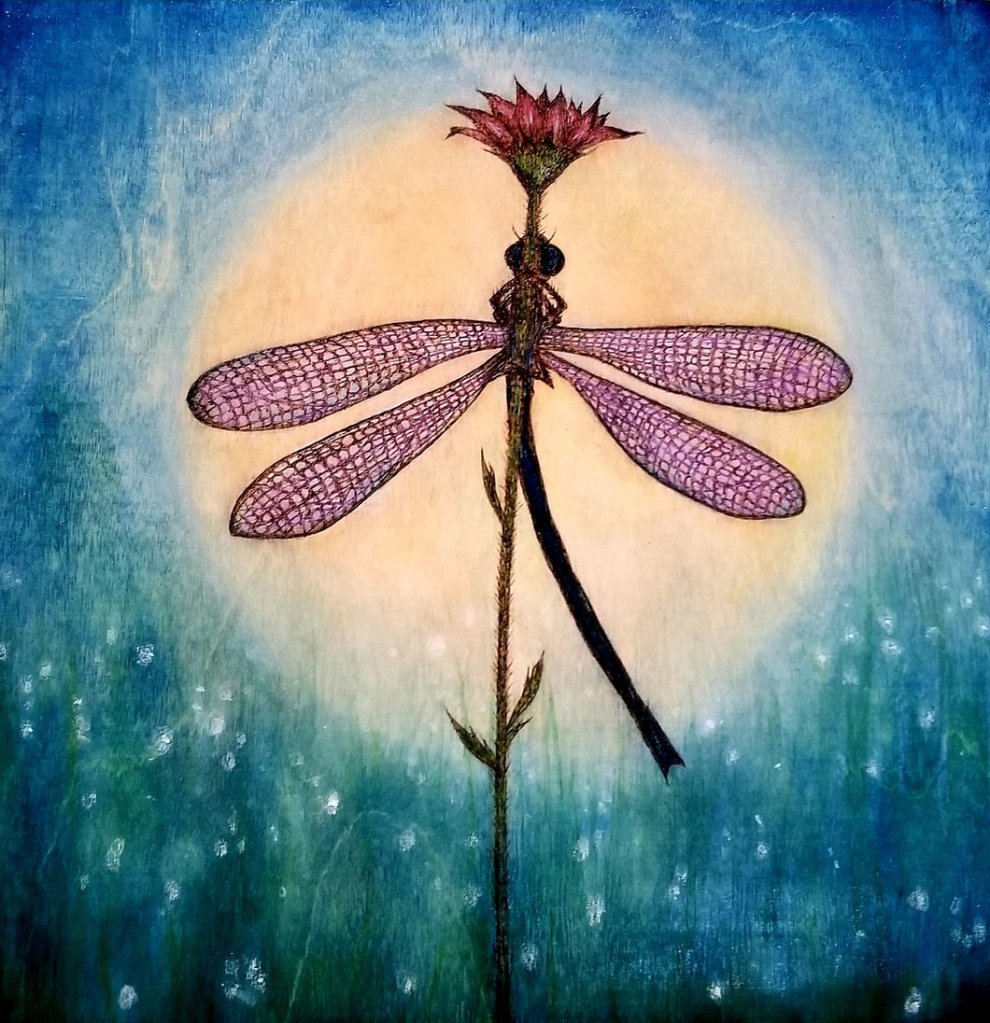
Poetry: The Dragonfly

The Dragonfly

The dragonfly, the sky’s morning grace

Hovers blue, aflame over the lake.

Where faery queenes with crowns of laurel

cradle infants teething broken coral.

While the little girl, whose name was Sin

Wears coloured ribbons in her hair.

She nestles in his deep despair

And paints ‘Death’ on the mantelpiece.

The coal that was her building blocks

she dropped in red opulence,

Where there find comfort in embers’s blankets

As purple flames turn to virulence.

The dismantl’d sun burned upwards from hell,

The sky weeped with the tolling bell

For his fallen lover with God’s bright hymn,

now smiled through dark fire’s rim.

And in gasping for his fallen life –

He Dropped his wings.

Stained glass shattered into glaucous water.

The funeral march ; the Devil’s porter.

But yet,

Candles fell in his place,

And gossamer shrouds of broken lace.

The unholy water smirked and unfurled

Pestilence that doused the world.

Oh peace, peace, peaceful slaughter!-–

Alone on the bank I watched it cleave,

As ocular victor I gently grieve

The shrouded day of Heav’nly test

While he cried for his fallen conquest.

And on the cotton of the thistle leaves

I gently lay my head to rest.

•• Sophie Boehler ••

The World According To: Life in Quarantine Post 2 ‘Poetry and Writing’

Poetry and Writing – two of my absolute favourite things. I am going to share some of my favourite poems and try and talk about how writing can be both creative and cathartic.

Starting off with poetry: If a heaven for poetry ever existed, it is this website. Imagine every poem ever written in one place – well here it is ( https://www.poetryfoundation.org/ )

Every poem can be interpreted in multiple ways, and there are infinite genres that allow you to do so. For me, poetry is much more musical than prose. There is a specific emphasis on rhyme scheme, on line length, number of stanzas, alliteration, plosives, punctuation etc., and therefore what is said out loud matters just as much as what is written down on the page. Every word matters in poetry, it is carefully selected and crafted to carry out a function, whereas prose is much more descriptive, and you have room to elaborate in ways that poetry does not really permit. I think that it is an art form in itself that does not get the attention it deserves from those who do not study English Literature past GCSE. It baffles me how a lot of people love to read, but very few actively seek poetry over a novel for fear that it is ‘too complex’ or has ‘too much hidden detail’ for them. When one visits an art gallery, or looks at a complex piece of architecture, do you dismiss it for being more opaque or complex than a stick man on paper, or do marvel at its beauty nonetheless? There is just as much hidden detail in paintings and buildings as in poetry, but you can still take what you want from it. So, having said that, here are some of my favourite works.

1. Memorial, Alice Oswold

I just finished reading this yesterday – I thought it was absolutely moving, written as a testimonial to all those who died in the ‘Iliad’, the tone is understandably sombre, yet Oswald brilliantly uses repetition to match the downbeat, funereal environment in which the poem is set, while simultaneously turning what is effectively a literary mass grave into a series of personal tributes. The balance between vibrant and intense imagery against the background of death and commemoration creates a beautiful space for poetry to exist! – love, Love, LOVE.

2. Beowulf, Seamus Heaney Translation

Beowulf is an Old English epic. Many people are put off by the sound of anything old, dismissing it as outdated and boring, but I also think many people (including myself at times) are put off by, or afraid of what they don’t understand. Beowulf is a fabulous story about a valiant warrior who battles a man eating monster named Grendel. The plot follows his journey to Denmark, and his subsequent battles. Beowulf faces three battles against Grendel, Grendel’s mother who seeks revenge for her son, and a Dragon. For anyone who likes Game of Thrones, the medieval setting of epics like Beowulf and stories in ‘The Icelandic Sagas’ (these feature in my article on women in the literary past) were used to inspire life North of the Wall. (Also currently on offer at only £1.30)

3. The Waste Land, T.S Eliot

This beautiful poem comprised of five sections, is regarded as one of the most important works in modernist literature. Each section has a different narrative, and a setting that shifts between sombre and sinister, to satirical and jovial. I love this poem because of its unpredictability, and the vast amount of content it covers. The reader never finds themselves in the same place, or with the same speaker. We are instead taken on a social journey that presents both the good, (but mainly the ills) of a modernist world. For me, this is not just a poem, but a work of art, the images create such strong tableaus of every day life, and as a result, the relatability of its setting really lifts the work off the page and into a third dimension.

This ‘In Our Time’ Podcast talks about “T.S. Eliot and Modernity’ it has a really interesting take on the poem and his other works, including my favourite ‘The Love Song of J. Alfred Prufrock’

4. ‘Ozymandius’, Percy Bysshe Shelley (married to Mary Shelley, author of Frankenstein)/Horace Smith and ‘Kubla Khan‘ by Samuel Taylor Coleridge

These are two of my favourite romantic poems by two fabulous poets. While Percy Bysshe Shelley may be less well known, he married Mary Shelley in 1816 who wrote the world famous ‘Frankenstein’ (I love it when the 19th Century woman is better known than the man). Nonetheless, his beautiful sonnet deals with the sad fate of a statue of an Ancient King (Ozymandius), lying abandoned in a desert. I did not actually know that Horace Smith was involved in the writing of ‘Oymandius’, I did not even know who he was which is a bit embarrassing, but, having researched him, he is most famous for his literary parodies. You can read this dazzling work online at the Poetry Foundation.

Here is the link: https://www.poetryfoundation.org/poems/46565/ozymandias

‘Kubla Khan’ is much longer than ‘Ozymandius’ but equally stunning. Coleridge is perhaps better known for his ‘Rhyme of the Ancient Mariner’ which is studied in various schools before GCSEs.

“According to Coleridge, he composed most of this poem within a dream or vision after having taken ‘medicine’ (By medicine, they definitely mean opium) for a slight indisposition. We know that Coleridge was addicted to laudanum (a form of opium), and so ‘Kubla Khan’ tends to be seen as a drug‑induced, visionary fragment of a poem. Coleridge said he woke up with two or three hundred lines of poetry fully formed in his head but, after writing down some of them, he was interrupted and could not recapture his intense creative vision.

Kublai Khan, a Mongolian leader in the thirteenth century, conquered China and built a lavish palace known as Xanadu. The first thirty‑six lines of the poem focus on Kublai Khan and his creativity, and we could see the whole poem as dealing with the power of artistic creation. Might the river bursting into life and then disappearing be a symbol of the way inspiration might strike a poet?

At line thirty‑seven, the poet focuses on a ‘damsel with a dulcimer’ and, later in the same verse, on his desire to revive her ‘symphony and song’ so he can emulate Kublai Khan. The Romantic view of the artist as an inspired but tormented genius is vividly described in the last few lines.” https://www.poetrybyheart.org.uk/poems/kubla-khan-2/

Here is the link to the poem: https://www.poetryfoundation.org/poems/43991/kubla-khan

5. Ariel, Sylvia Plath (the full collection, not just the single poem)

Sylvia Plath, a major female writer of the 20th Century, Plath was American but lived in London for a long time. Plath wrote a large amount of confessional poetry and often turns to nature for her images. “Ariel” translates to “lion of God” from Hebrew and in the single poem ‘Ariel’ at the start of the collection, she refers to herself as ‘God’s lioness’ which I think is a dazzling image of both female empowerment, and hints at self-pride. While the poem ‘Ariel’ is definitely not my favourite, actually I really don’t like it… The remainder of the works are stunning (my favourite is Lady Lazarus). Silvia Plath unfortunately made the decision to take her own life in 1963 aged only 31. This was a tragic event, and a great loss to the literary world.

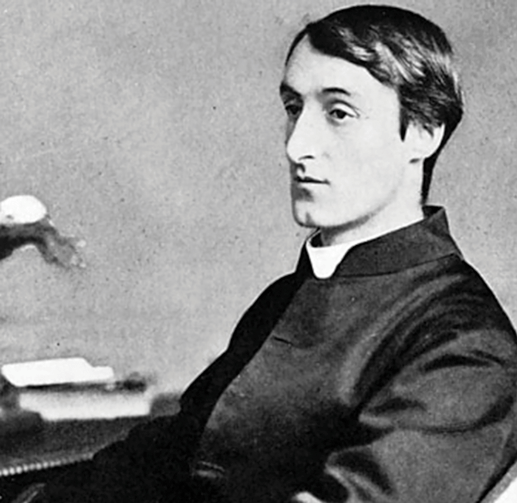
6. Gerard Manley Hopkins

Gerard Manley Hopkins is one of my all time favourite poets. Some of the burning imagery in my poem ‘The Dragonfly’ on my writing page is taken from ‘As Kingfishers Catch Fire’. Some of mine and my friends’s favourite works of his are ‘The Windhover’, ‘Carrion Comfort’, and ‘The Wreck of the Deutschland’. He is deemed one of the greatest writers of the Victorian era (rightfully so!).

7. Sonnets, William Shakespeare

It wouldn’t be any form of English Literature post without Shakespeare featuring at least a little bit. Now, while many people are well acquainted with his plays, often through the long, arduous hours of forced GCSE English, few of his sonnets are ever studied. While there are literally millions of them, and no, not all of them are good, there is something for everyone.

Writing Non-Fiction/Reporting:

Starting this blog for me has been so interesting, it has allowed me to research current affairs, and I’m planning articles on a load of new, interesting things. However, I am still learning how to write properly. I was meant to be working in the School of The New York Times this summer, which would have allowed me to expand my writing further. Sadly, due to the recent coronavirus outbreak, I was not able to make it to New York. So, I started this blog instead, hoping to get myself into the swing of writing articles about things that interest me personally, and for anyone who has similar interests to me. I would definitely recommend starting a blog or newsletter to anyone who is interested in writing, journalism, or a future in media. I am by no means an expert, but reading is the way I get most of my ideas. I also subscribe to a couple of magazines such as the Economist, and the BBC History Magazine, I listen to podcasts on ‘In Our Time’ which I would definitely recommend.

BBC History Magazine: https://www.buysubscriptions.com/print/bbc-history-magazine-subscription?promo=PPC2020&style=brand&gclid=EAIaIQobChMI5M2kn5rL6gIVRLTtCh2HmwZgEAAYASAAEgKSCfD_BwE

Economist: https://subscription.economist.com/DA/PPC/BASE12_P/Google_Keyword-Brand?gclsrc=aw.ds&gclid=EAIaIQobChMI9rWwtprL6gIVRe7tCh02_wmVEAAYASAAEgK46PD_BwE&gclsrc=aw.ds

In Our Time: https://www.bbc.co.uk/programmes/b006qykl

Writing Fiction and Poetry:

I spend a large amount of my life living in what I think can be best described as a dream land, whether that is through literature, film, or music. Nonetheless, writing fiction and poetry is definitely an essential to maintaining it. There are a series of books that give you advice about how to begin writing. For me, the most effective ones are those that are more based on a literary criticism approach. I find that stepping into other people’s headspace or gaining access to an author’s ‘behind the scenes’ if you like, sometimes helps me understand the imagery that I want to replicate. I often look at my favourite author’s selected essays to do this as well, and I will link these below. As you will see I have a poetry and writing section page on this blog where I publish some of my own work. I’d love to hear from any of you, whether you like or dislike my work (either is totally fine, I won’t be offended), if you want to send anything to me whether that is a debate, or your own work).

  1. Virginia Woolf, ‘Selected Essays’

2. ‘Why I Write’, George Orwell

3. Literary Criticism and Theory from Plato to Post-colonialism, Routledge

4. The Art of Fiction, David Lodge (this is probably my favourite)

There are a series of poetry competitions that are available, and might be a fun idea during lockdown 🙂

Discover them here: https://www.nationalpoetrylibrary.org.uk/write-publish/competitions

https://poetrysociety.org.uk/competitions/

Quarantine Series: The World According To ‘Self-Improvement during Quarantine’ Post 1: Reading

https://www.standard.co.uk/go/london/attractions/londons-prettiest-and-most-instagrammable-bookshops-a3929171.html

Quarantine and Lockdown have been the bane of everybody’s Covid-19 experience. Here are some ideas to pass the time that my friends, professors and I have engaged in over the course of lockdown. We hope you get as much enjoyment out of them as us.

I will be posting a Quarantine Series as follows (see below). I aim to do one every couple of days-1 week depending on uni prep work. Here are a list of categories ranging from fun, crafty activities to academic reading, board games to colouring books, and language learning to dress-making. As per usual click on the photo to be taken to the link you can purchase these items!! This post is Week 1 and so we will be discussing reading – how to get into it, how to broaden your cultural horizons, what books we recommend, specific websites you can use! Enjoy…

  1. Reading,
  2. Poetry (writing and reading),
  3. Art and Design (including adult colouring in – V. Exciting)
  4. Dress-making and knitting,
  5. Music/Writing Music,
  6. Language Learning,
  7. Mental Well-Being,
  8. Health and Fitness
  9. Make-Up/Hair-Dye
  10. Further Reading (for people who are avid readers, looking for different genres, cultures, or simply looking to expand their reading taste)
  1. Reading Classics, Modern/Best-Sellers, International Lit.

Reading is something many of us simply do not have the time to do in the day. I know that I often find myself too tired to read in the evenings, or caught up in work and essay deadlines. However, it is also true that when starting reading for the first time in a while, it can be a bit overwhelming regarding knowing where to start. We all have different tastes in books, and as a student of literature almost half my personality is taken up by what I read (sad I know). For students of literature who love reading as much as I do, the literary canon is something you should definitely familiarise yourself with. However, the literary canon has fallen under immense scrutiny (rightfully so) for its nominal branding. While one can understand labels such as ‘The English Literary Canon’ or ‘The Chinese Buddhist Canon (大藏經)’ as they are specifically referring to a single and specific culture, one has to question more ‘universal’ labels such as ‘The Western Literary Canon’. This evidently insinuates that the West have a greater and more worthwhile body of literature. This is something we MUST endeavour to change as it encourages the very superiority complexity we are seeking to change. I feel that the recent Black Lives Matter protests have created the ideal circumstances to contest this point at a period of mass questioning and engagement with the topic. I am trying to read a wider variety of African/Asian/ and African-American Literature, and while I unfortunately cannot say that I am exempt from being, at least to some extent ignorant to these literary cultures by comparison to my own, I will include some of what I have read and enjoyed/the books on my reading list. I would love any recommendations (comment or email them to me) to help myself and others break the ice with a literary culture that is unfortunately a novelty for many students of the literary west.

Category 1: Classic Novels

a. English Literary Cannon

  1. Basically anything written by William Shakespeare! (my personal favourite plays are Coriolanus , ‘King Lear’, Hamlet‘, and ‘Cymbeline

2. Jane Austen, Emma’ – the adventures of a young girl who believes herself to be a matchmaker, and tries her hand pretty successfully in a ‘man’s world’. If you are a fan of the movie ‘Clueless’, that is based on ‘Emma’!

3. Mary Shelley, ‘Frankenstein’ – Victor Frankenstein attempts to reanimate a corpse to practice his passion for science. However, this has tragic consequences. Although the being is not innately malign, it becomes so after being rejected by his creator and by society. This book became a platform for artistic creativity, theatre, and film following its publication in 1816.

4. Anything by Charles Dickens – While many people (Including myself) are slightly put off by Victorian literature at times, thinking it is boring, dense, and depressing. Well, a lot of the time – you are right. However, Charles Dickens, author of ‘Oliver Twist’, ‘A Christmas Carol’, and ‘David Copperfield’. These three works have become major motion pictures, and theatrical entertainment for thousands of people all over the world. How can one appreciate these works fully without reading the pages in which their creativity was born? I do recommend giving Dickens a go – if it gets hard, think of singing ‘Where is Love’ or ‘Consider Yourself’ (plus, you get to sound clever afterwards).

These are the complete works. Not only are they very aesthetic but they are also a very good deal (£32 for all the major works over £10 per book in any Waterstones)

5. Virginia Woolf, ‘To the Lighthouse’ – If any of you have read my article ‘The World According to Are Women Safer in the Literary Past than Modern Society’, you will know that I am a massive Virginia Woolf lover. My favourite of her books ‘Orlando’ is already linked at the bottom of that article. ‘To The Lighthouse’ is arguably Virginia Woolf’s magnum opus, it is about the Ramsey family and their 8 children. They own a family home where they holiday every year. However, as death and war intervene they slowly stop going to the Isle of Skye, until one year when they take a very important trip back to the lighthouse. (I was personally a bit disappointed with this novel, simple plot, but the imagery as per usual is pure art).

6. George Orwell, ‘1984’ – Ironically written in 1948, ‘1984’, an absolute gem of English Literature. Unnerving yet an absolutely stunning work of art. Every english speaking person should read this.

Hidden away in the Record Department of the sprawling Ministry of Truth, Winston Smith skilfully rewrites the past to suit the needs of the Party. Yet he inwardly rebels against the totalitarian world he lives in, which demands absolute obedience and controls him through the all-seeing telescreens and the watchful eye of Big Brother, symbolic head of the Party. In his longing for truth and liberty, Smith begins a secret love affair with a fellow-worker Julia, but soon discovers the true price of freedom is betrayal.

George Orwell’s dystopian masterpiece, Nineteen Eighty-Four is perhaps the most pervasively influential book of the twentieth century. (Amazon Reviews)

b. African Literature and Best-Sellers

  1. Half of a Yellow Sun, Chimamanda Ngozi Adichie – Ugwu, a boy from a poor village, works as a houseboy for a university professor. Olanna, a young woman, has abandoned her life of privilege in Lagos to live with her charismatic new lover, the professor. And Richard, a shy English writer, is in thrall to Olanna’s enigmatic twin sister. As the horrific Biafran War engulfs them, they are thrown together and pulled apart in ways they had never imagined.

Chimamanda Ngozi Adichie’s masterpiece, winner of the Orange Prize for Fiction, is a novel about Africa in a wider sense: about the end of colonialism, ethnic allegiances, class and race – and about the ways in which love can complicate all of these things.

2. Girl, Woman, Other, Bernadine Evaristo – WINNER OF THE 2019 BOOKER PRIZE (Absolutely recommend) From Newcastle to Cornwall, from the birth of the twentieth century to the teens of the twenty-first, Girl, Woman, Other follows a cast of twelve characters on their personal journeys through this country and the last hundred years. They’re each looking for something – a shared past, an unexpected future, a place to call home, somewhere to fit in, a lover, a missed mother, a lost father, even just a touch of hope . . .(Amazon reviews)

3. Things Fall Apart, Chenua Achebe – One of the BBC’s ‘100 Novels That Shaped Our World’ – Okonkwo is the greatest wrestler and warrior alive, and his fame spreads throughout West Africa like a bush-fire in the harmattan. But when he accidentally kills a clansman, things begin to fall apart. Then Okonkwo returns from exile to find missionaries and colonial governors have arrived in the village. With his world thrown radically off-balance he can only hurtle towards tragedy. (Amazon Reviews)

4. ‘Between the World and Me,’ Ta-Nehisi Coates – Written in the form of a letter to his 14 year old son, attempting to explain racial problems in America.

A bold and beautifully written exploration of America’s fraught racial history and its contemporary echoes that will redefine wider understanding of race and the roots of American identity. (Amazon Review)

c. Chinese Buddhist Literary Canon

I have to hold my hands up here and admit that I have read very little Chinese literature, but I have started reading ‘The Chinese Literary Canon: Exploring 3000 Years of History and Culture’ and it is absolutely brilliant. I completely recommend it to get a broad perspective on Chinese literary history. As I read more I will add to this section.

Category 2: Modern/International Best-sellers

  1. Never Let Me Go, by Kazuo Ishiguro (Booker Prize Winner) – The gripping and slightly dark story of a boarding school called Hailsham. Initially the school appears entirely normal and the students are well cared for. However, no pupil is allowed any contact with the outside world nor do they have any idea of what is in it. It is only when the protagonist (Kathy) and her friends leave school that they realise the dark secret behind Hailsham. Absolutely gripping adventure where we are kept as in the dark as the characters.

2. Middlesex, Jeffrey Eugenides – (Pulitzer Prize Winner, Voted 4.01 stars on goodreads after 573,413 ratings  V. Impressive) an absolutely fabulous tale of a young hermaphrodite named Cal who battles with her ambiguous sexuality. S/He recounts her entire family history recalling on life in Greece, the burning of Smyrna, and then their arrival in the USA. This novel perfectly mixes the beauty and natural art of classics and ancient history with a modern exploration of the diversity of gender and sexuality. A personal favourite!! I loved this perspective so much, I used it for my Pre-U coursework.

Goodreads Synopsis (in case mine missed anything): Middlesex tells the breathtaking story of Calliope Stephanides, and three generations of the Greek-American Stephanides family, who travel from a tiny village overlooking Mount Olympus in Asia Minor to Prohibition-era Detroit, witnessing its glory days as the Motor City and the race riots of 1967 before moving out to the tree-lined streets of suburban Grosse Pointe, Michigan. To understand why Calliope is not like other girls, she has to uncover a guilty family secret, and the astonishing genetic history that turns Callie into Cal, one of the most audacious and wondrous narrators in contemporary fiction. Lyrical and thrilling, Middlesex is an exhilarating reinvention of the American epic.

4. Beloved, Toni Morrison (Pulitzer Prize Winner) –

Goodreads Synopsis: Winner of the Pulitzer Prize, Toni Morrison’s Beloved is a spellbinding and dazzlingly innovative portrait of a woman haunted by the past.

Sethe was born a slave and escaped to Ohio, but eighteen years later she is still not free. She has borne the unthinkable and not gone mad, yet she is still held captive by memories of Sweet Home, the beautiful farm where so many hideous things happened. Meanwhile Sethe’s house has long been troubled by the angry, destructive ghost of her baby, who died nameless and whose tombstone is engraved with a single word: Beloved.

Sethe works at beating back the past, but it makes itself heard and felt incessantly in her memory and in the lives of those around her. When a mysterious teenage girl arrives, calling herself Beloved, Sethe’s terrible secret explodes into the present.

Combining the visionary power of legend with the unassailable truth of history, Morrison’s unforgettable novel is one of the great and enduring works of American literature.

5. Where the Crawdads Sing, Deila Owens – Absolutely dazzling story! Rated 4.48 stars on Goodreads after 783,809 ratings . I definitely recommend this one. Story of a girl names Kya Clark or ‘Marsh Girl’ who haunts Barkley Close in North Carolina. When heart throb of the novel is found dead all fingers point to Kya. However, Kya is sensitive and intelligent as found her friends and teachers in nature. One day she opens herself up to a new lifestyle when two men show interest in her natural and wild beauty – until the unimaginable happens.

6. The Beekeeper of Aleppo, Christy Lefteri –

Nuri is a beekeeper; his wife, Afra, an artist. They live a simple life, rich in family and friends, in the beautiful Syrian city of Aleppo – until the unthinkable happens. When all they care for is destroyed by war, they are forced to escape.

As Nuri and Afra travel through a broken world, they must confront not only the pain of their own unspeakable loss, but dangers that would overwhelm the bravest of souls. Above all – and perhaps this is the hardest thing they face – they must journey to find each other again. (Amazon Synopsis)

Category 3: European Literature

  1. Master and Margarita, Mikhail Bulgakov (Probably in my top 3 favourite books of all time) However, the plot is extremely complex and full of little labyrinths which is why I love it. As a chronically dyspraxic being, I am going to defer to Amazon’s authority when trying to summarise it: “The devil makes a personal appearance in Moscow accompanied by various demons, including a naked girl and a huge black cat. When he leaves, the asylums are full and the forces of law and order are in disarray. Only the Master, a man devoted to truth, and Margarita, the woman he loves, can resist the devil’s onslaught.” For history lovers, the world of ‘Master and Margarita’ paints an allegory of Stalinist Russia which provides a gripping perspective of art and culture in times of intense repression.

2. Crime and Punishment, Dostoyevsky – Raskolnikov wanders around the streets of St. Petersburg seemingly with very little aim or purpose. However, he then commits an act of murder without explanation, and subsequently without regret. In his own head, Raskolnikov conjures up an image of himself as a great and noble man serving some higher power. However, as he chased down by police, this image becomes tainted by the voice of his own conscience. Inversely, it is only a prostitute (a profession deemed immoral at the time period) named Sonya who seems able to offer him the redemption to appease his conscience.

3. 100 years of Solitude, Gabriel Garcia Marquez (Latin American but written in Spanish so I guess that sort of counts) The brilliant, bestselling, landmark novel that tells the story of the Buendia family, and chronicles the irreconcilable conflict between the desire for solitude and the need for love—in rich, imaginative prose that has come to define an entire genre known as “magical realism.” (Goodreads summary, rated 4.08 stars after  727,017 ratings )

4. The Trial, Franz Kafka –

A really interesting take on the values of human crime and punishment (pun not intended) and how one does not always correlate to the other. Kafka explores how sometimes one commits a crime and gets away with it, other times we do not but are put wrongly in the spotlight. Josef K. (a bank clerk) is condemned for a crime did not commit. Despite trying to defend himself all he seems to do is open a crevasse of unknowns and uncertainty. A true revelation of the futility and uncertainty of human nature.

“It offers everything and confirms nothing” – Albert Camus

Bringing us nicely onto our next author…

5. L’étranger (The Outsider), Albert Camus – «Quand la sonnerie a encore retenti, que la porte du box s’est ouverte, c’est le silence de la salle qui est monté vers moi, le silence, et cette singulière sensation que j’ai eue lorsque j’ai constaté que le jeune journaliste avait détourné les yeux. Je n’ai pas regardé du côté de Marie. Je n’en ai pas eu le temps parce que le président m’a dit dans une forme bizarre que j’aurais la tête tranchée sur une place publique au nom du peuple français.» (Goodreads)

Et pour les gens qui ne parlent pas français (and for the people who don’t speak french)…

"When the bell rang again, the door of the box opened, it was the silence of the room which rose towards me, the silence, and this singular feeling that I had when I noticed that the young journalist looked away. I did not look at Marie's side. I did not have time because the president told me in a bizarre form that I would have my head severed in a public place on behalf of the French people. ” (Goodreads Translation).
Useful Websites for maintaining reading:

  1. Obviously I love reading and so I will be posting about reading again for sure so stay tuned or recommend books to me!! You can send any recommendations or opinions on a book directly to me in the sumbissions/suggestions tab. I’d love to hear from you.
  2. https://www.goodreads.com/ is one of my faves. Sign up for free and enter the beautiful and vast world of books. With a synopsis and rating of all books ever basically, you can never go too wrong in making a decision about what to read.
  3. https://www.waterstones.com/campaign/new-books Waterstones is my favourite rainy afternoon. The website is vast with some really helpful navigators so you can get exactly what you’re looking for.

Beautiful reading spots and shops:

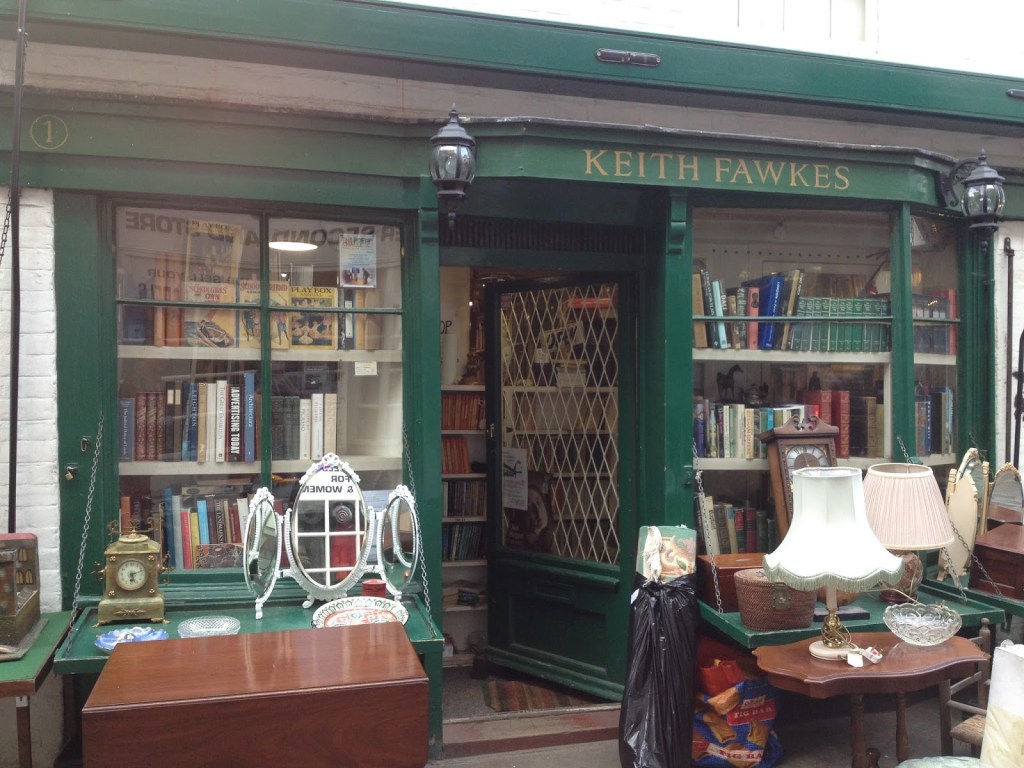
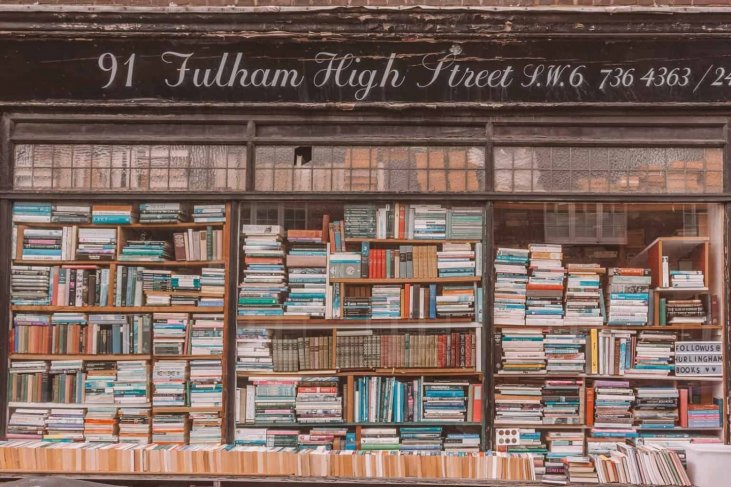
  1. Second hand book shops are the love of my life. I have found some real gems over the years in second-hand shops. I found a first edition ‘Alice Through The Looking-Glass’ which was still priced in shillings, A map of Paris from when the metro was first built, and a wartime ration book amongst many others. I love old-books because they have a story to tell. As much as a crisp copy of a book is immensely satisfying, an old book had stories of hundreds of years sometimes, the dust of all its owners, and a musty smell that sends your senses into time travel. The books are normally cheaper as well if you’re shallow. Here are my 2 favourite and go-to second hand book shops…

Keith Fawkes, Hampstead

Photo: http://www.thebookshoparoundthecorner.co.uk/2016/02/everyone-loves-good-character.html

2. Hurlingham Books, Fulham

Photo: https://www.standard.co.uk/go/london/attractions/londons-prettiest-and-most-instagrammable-bookshops-a3929171.html

I hope this has helped and I’d love to hear how you go on!! Happy Reading…<3

The World According to ‘Are Women Safer in the Literary Past than Modern Society?’

“When, however, one reads of a witch being ducked, of a woman possessed by devils, of a wise woman selling herbs, or even of a very remarkable man who had a mother, then I think we are on the track of a lost novelist, a suppressed poet, of some mute and inglorious Jane Austen, some Emily Bronte who dashed her brains out on the moor or mopped and mowed about the highways crazed with the torture that her gift had put her to. Indeed, I would venture to guess that Anon, who wrote so many poems without signing them, was often a woman.”

Virginia Woolf, ‘A Room of One’s Own

Although one frequently defends the view that the world of the 21st Century surmounts all its predecessors when it comes to female empowerment, ancient and medieval literature is increasingly making us question whether this opinion is justifiable, or simply stems from our own arrogance. It is no secret that women have been judged as the inferior sex throughout history – the reasons for this, however, remain largely unexplained and under-explored, particularly from a secular standpoint. While it is easy to shirk blame onto religion when you do not have a faith, or to absolve yourself of personal prejudice by confining it to antiquity, we must turn the issue on its head and look at it as a global prejudice rather than a personal one. I am seeking to explore the representation of women in literature through different global histories to try and alter the perspective on global feminism in the modern world.

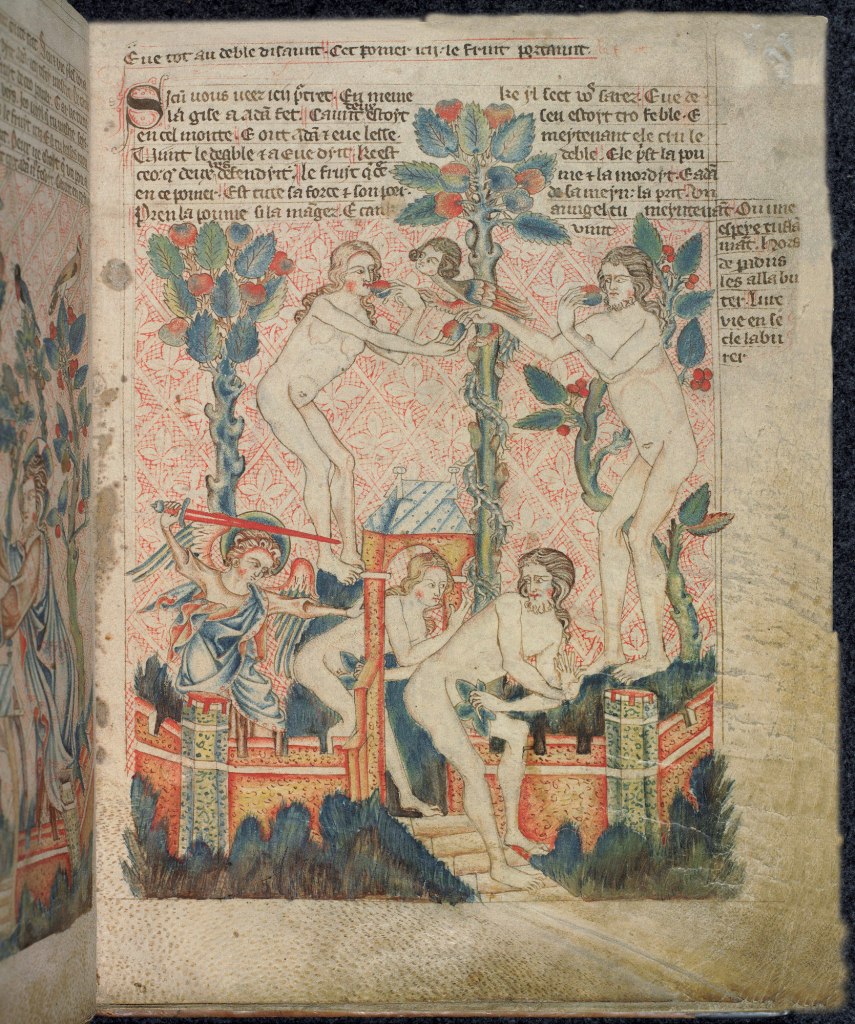
There is a lot to be said for such prejudices originating in religion. When it was Eve as opposed to Adam who ate the fruit in the Garden of Eden a physical manifestation of women’s ‘weakness’ and ‘lack of will power’ was born in the Holy Bible, a text that has been largely responsible for the creation and preservation of a hierarchy of the sexes. John Milton’s ‘Paradise Lost’, a transformative literary (and Christian) epic of the 17th Century that seeks to ‘justify the ways of God to men’ to ordinary learners, condemns Eve as being “from sin and blame entire” (9.291-2). The reassertion of church and monarchy, following the English Regicide in 1649 is perhaps to blame for the persistence of such ideas of female inferiority in the post-enlightenment centuries. However, the sufferings of Christ himself could perhaps indicate some sense of sexual equality within Christianity. Both men and women must abide by the same law, obey the same commandments in order to enter God’s kingdom in heaven. While spiritually men and woman may be equal, a temporal hierarchy is imposed upon them. It is people’s interpretations of the Gospels coupled with the megalomania embedded in human nature that has moulded religion into something oppressive as opposed to unifying.

https://www.bl.uk/restoration-18th-century-literature/articles/eve-in-miltons-paradise-lost-poignancy-and-paradox Holkham Bible’s depiction of Eve eating the forbidden fruit (Really interesting article!)

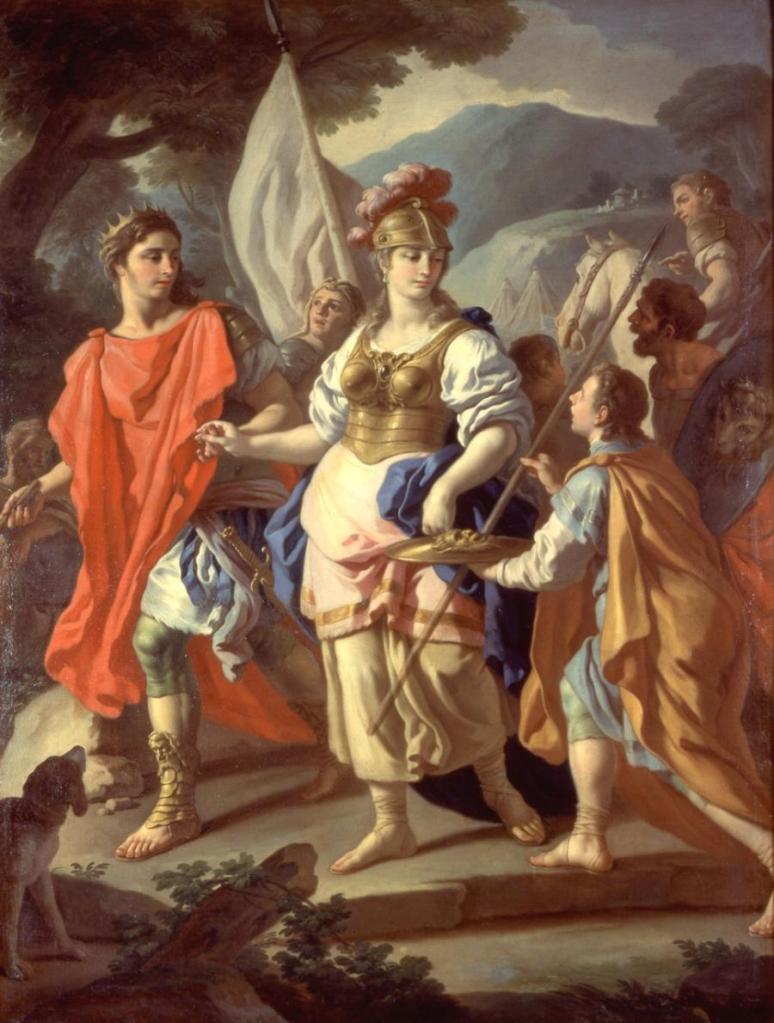
The last two centuries have seen a major increase in secularism worldwide. With Communism prevailing most notoriously in the USSR from 1917 until its collapse in the 90s, but also strongly present in Castro’s Cuba and Mao’s China, the world saw its largest digression from the religious sphere of influence. In addition, France has declared itself secular to the extent that no religious icons may be shown in public. In light of the aforementioned Milton quotation, perhaps one could expect that with the departure from religious ideology, there could be an end to the intense theological repression of women. One must only look to the ‘The Odyssey’, ‘The Iliad’, and ‘The Aeneid’  from the ancient worlds of Greece and Rome to see that both women and men were deified equally. This begs the question as to why in an ancient or pagan society does the absence of Christianity bring about equality, but the modern world has decided to keep elements of oppression despite becoming increasingly secular.  Camilla (‘The Warrior Princess’) in ‘The Aeneid’ is constantly depicted in battles alongside her sister fighting for their family, the Volscian tribe. The images of literary heroism that are found in battle isolate the modern woman from such a depiction as they may not even fight on the front line in any military service. It becomes increasingly apparent that the ideal of the admirable and brave women of the classical world is not attainable for the women of the 21st century. 

https://queenotrera.wordpress.com/2015/01/03/camilla-representation-for-the-volscians/ Camilla

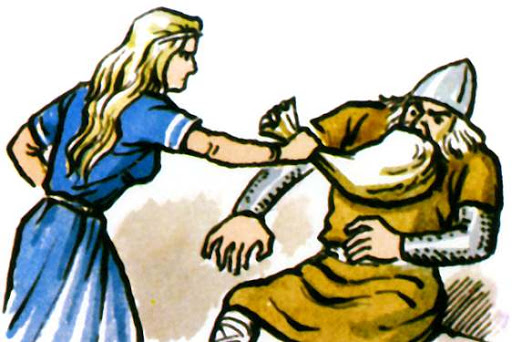
According to a survey conducted by the Independent in 2016, although touched by Christianity around the years 999/1000, Iceland now finds itself among the top 6 ‘most convinced atheist’ or secular countries in the world. Interestingly, we look to the Ancient, Pagan Nordic and Viking civilisations for some of the earliest examples of female integration within the contemporary world of the time. ‘The Sagas of Icelanders’ are family stories narrated, passed down through aural tradition, and later written down and preserved by the first Icelandic settlers. They hold great resonance as both historical sources and literary works and this is largely down to their radical outlook on women. They gave rise to the concept of the ‘influential woman’ which although present in both the ancient and modern worlds, still remains in many ways a taboo.   

The Icelandic Sagas emerged at a time of immense cultural and religious change across Europe with the rise of Christianity. While we applaud the emergence of the influential woman, we also learn that such women are only those who are overtly more masculine in demeanour. To use the words of the Sagas themselves, the men lived in ‘the world of… trade, politics, and law’. However, Giselle Gos enlightens, frequent “examples of a wise woman habitually engaging in social and judicial affairs.” Her research demonstrates that the idiosyncrasy of the Icelandic Sagas lies in the psychological similarity between men and women. The notion of a ‘wise woman’ is defined by an ability to think on a par with her male counterpart. Such psychological unity is embodied by protagonists such as Gudrid Thorbjarndottir. She states, “I have neither magical powers nor the gift of prophecy…these are events in which I wish to take no part because I am a Christian woman.” We see here the “universalization” of a female mind-set moving away from an individual superstition towards a collective religious identity. She is described as being “more than capable of keeping up with the intellectual and philosophical conversations of men.” Further examples of this exist in Gudrid Thorbjarndottir’s worldly experience. Born in 980, and hero of the ‘Saga of Greenlanders’, Gudrid, being among the few well-travelled women of the Sagas, is one of the most influential and controversial women of early European literature having more experience than many of her male counterparts. Perhaps represented in the modern world by someone like Amelia Earhart, Gudrid is the alleged founder of the Americas and embarks on pilgrimages across the South of Iceland, and on further voyages from Greenland to Norway, outliving her three husbands in the process.

The Sagas, being largely written by men, do not refrain from voicing female discontent. This exacerbates the credibility of female sufferings making them among the most feminist works of world literature. It is disheartening that so much rudimentary, comparatively modern literature took such a catastrophic leap backwards in its vision of the female protagonist. It is evident that the Icelandic women remained unscathed by theological ridicule and indeed benefited from the effects of Christianity, marking a stark contrast with those of the Anglo-Saxons and the majority of practicing Europe. 

The most radical of women’s rights within the Nordic world was their right to attend their national parliament or ‘Thingvellir’. Attending parliament was a national right by law in 900 AD. It is therefore baffling that it took women in the UK until 1928 to achieve the vote on the same grounds as men. It is true that some were granted the vote in 1918, however, these were only women over 30 with property in their name which excluded the majority of women in the country. It is equally striking that it is only with radical change that women in the modern world were given equal rights. It is often only with the absence of men that women were able to prove themselves not to be the ‘weak’ or ‘hysterical’ creatures they were assumed to be. The First World War saw the loss of almost an entire generation of young men. Women were subsequently recruited to fill the jobs of conscripted men, and it was only then that they were deemed respectable enough to gain the vote. Furthermore, it was only with the baby boom of the post Second World War era that women were re-granted the right to their own bodies (men were able to take women for a hysterectomy until 1950). The contrast between an ancient society and events occurring less than 100 years ago is extreme, and in many instances beyond explanation. The Suffragettes founded their principles on ‘deeds not words’. While frequently debated, the absence of words pulls on the historic ideology that women should be seen and not heard. By ironically adopting this as a slogan for female suffrage, there is a missile positioned at the persistence and unnecessary stoicism of female oppression.

The Icelandic Sagas are unprecedented and undoubtedly unique in their approach to the representation of the role of women generally. Furthermore, The Sagas examine the rise of the influential woman and explore a previously un-encountered literary territory of a woman with power. 

That being said, it seems as though a regression has since occurred in Iceland as well. The early months of 2019 saw a large number of protests within Iceland in which women marched out of their workplaces after having completed only 73% of the working day, the exact percentage of gender pay gap currently present in Iceland. It appears that the co-existence of the women of the Sagas ‘was later eclipsed by the emerging Viking patriarchy’ (Giselle Gos) and has since been lost throughout the centuries as Iceland came to ‘modernise’ itself. While typically modernising is considered a positive thing with regard to industry, infrastructure etc., in these circumstances we must consider whether to be ‘modern’, especially as a woman, means to accept a level of prejudice.

In light of this, only a shocking 1 in 30 English speakers knew that it was in fact the Vikings that beat Christopher Columbus to the ‘New’ World by almost 500 years. All the more shocking is 1 in 2.3 million know that it was in fact a woman under the command of Leif Erikson that ‘founded’ the Americas. Why is it Columbus who is enshrined in history textbooks as the founder of the modern world? History, in what would be a most hypocritical act anathema to its function as a record, appears to have censored itself. It is Virginia Woolf’s ‘A Room of One’s Own’ cited at the top of the article, published in 1929 as one of the first overtly feminist satires that deals with sexual disparity in the modern world, and questions such absurdity:

“I told you in the course of this paper that Shakespeare had a sister; but do not look for her in Sir Sidney Lee’s life of the poet. She died young—alas, she never wrote a word. She lies buried where the omnibuses now stop, opposite the Elephant and Castle” – Virginia Woolf 

The ‘birth of the novel’ or cultivation of the Victorian literary era marks a fulcrum point, separating the literary past from the societal present. Academics generally date this time to around 1800.  We must beg the question as to why the divide falls here. What is it that academics see as distinctly more modern about this period? If we take modern to mean new, upcoming and up to date, why do we class the removal of identity as something belonging to the modern world? Why were the writers Mary Anne Evans (George Eliot), Charlotte, Emily, and Anne Brönte (Currer, Ellis and Acton Bell), Nelle Harper Lee (Harper Lee)  whose works define English and American Literature forced to write under pseudonyms to get their work published? Famous author J.K. Rowling still actively chose to write under the pseudonym Robert Galbraith until recent years. The shift from women being represented in literature as equal to men in most fields to being forced to assume a male identity in order to publish literature marks a clear regression in the way that women are societally perceived and, by extension, further reinforces the gap between reality and their representation in literature. 

Different though the sexes are, they intermix. In every human being a vacillation from one sex to the other takes place, and often it is only the clothes that keep the male or female likeness, while underneath the sex is the very opposite of what it is above. ”  (Virginia Woolf, Orlando) – My favourite book!

The Ancient Egyptian scriptures have given rise to the concept of ‘ma’am’ which translates as ’synthesis and balance in every aspect of life’. Barbara Patterson sheds light on this ideology by claiming that ‘within the patriarchy, women exercised considerable power and independence’ and were inevitably able to rule with figureheads such as Cleopatra. Although not entirely ideal, the Egyptians dismissed sex and judged a person – male or female – based on their social class. Much like the Greeks and Romans, the Egyptians worshiped both male and female gods and both were written about by scribes with equal weight. Women were deemed to be ‘capax’ or competent within literary teachings, and had the right to an adoption in their own name, participation in legal contracts as well as the buying and selling of property. These are all things that when transitioning from BC to AD were for unknown reasons, removed from society. 

The world of Shakespeare holds an interesting role for women. While many of Shakespeare’s female characters – for instance Portia in ’The Merchant of Venice’, Imogen in ‘Cymbeline’ and Viola in ‘Twelfth Night’ must disguise themselves as men in order to to outwit their male counterparts in a public domain, he persistently casts women in integral intellectual roles within his plays. Shakespeare carefully selects the soothsayers or ‘truth-tellers’ for most of his plays to be women, in keeping with the fortune-tellers of the ancient worlds. This is seen in the three witches of ‘MacBeth’ who, although vulgar in appearance, are cast to relay accurately the truth of MacBeth’s fate, however ugly it may be.  

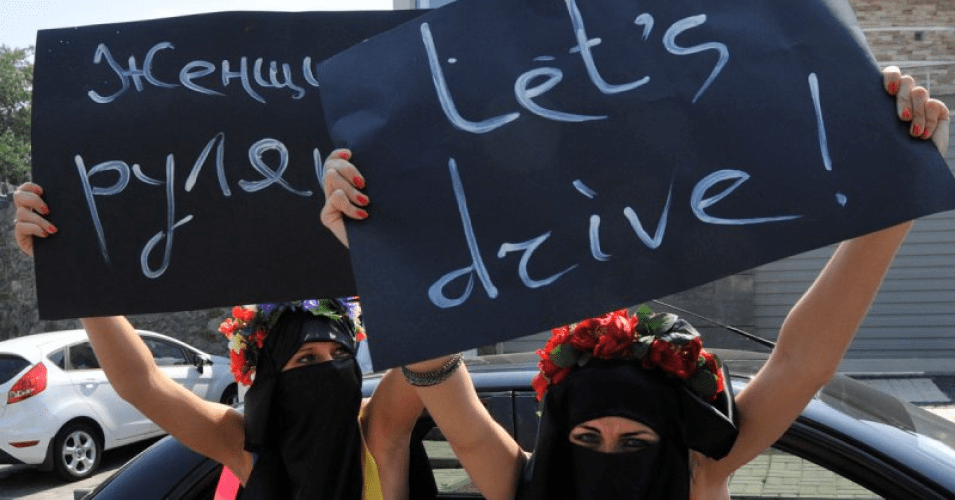
The final question one must consider with regard to women’s role both in literature and in society past or present, is the extent to which the literary representation of women lines up with the perception of the contemporary woman at the time. While the ‘Sagas of Icelanders’ are literary, their roots are based in historical accuracy, therefore the margin for miscommunication is slim. However, the diverse worlds of the 20th and 21st centuries give rise to powerful women such as Margret Thatcher, Michelle Obama, Theresa May and Hillary Clinton who have proved themselves more than a match for their male political counterparts. On the other hand, there are equally women who remain oppressed. Women in the Middle Eastern region of Saudi Arabia were only permitted to drive in June 2018, something that – although legal – is still frowned on today. The plethora of women that exist in the ‘modern world’ reside in both opposing camps – those who suffer oppression based on their sex and those who thrive in top professions. Therefore, we must consider that ‘modern’ does not necessarily guarantee a positive connotation. In this way, the feminism and female equality of the literary past marks an accurate representation of female aspiration albeit not an accurate account of their social manifestation. One gets a more honest sense of female aspiration through literary history as it has the power to expose clandestine female desires than one gets in modern society. However, many of the societal prejudices of the time that women silently endured historically, the modern world allows women to voice freely today. Therefore, while modern society is arguably the most feminist it ever has been, literary history provides a clearer trajectory regarding the battle for equality and the fulfilment of female aspiration.

https://www.commondreams.org/views/2020/03/11/saudis-brave-women-pull-back-curtain-crown-prince-mbs Women’s protest in Saudi Arabia contesting the driving ban for women in 2017

Sophie Boehler

Books and Resources Cited: Click on the book to be directed to where you can buy them should you be interested

1. A Room of One’s Own, Virginia Woolf

2. The Icelandic Sagas

2a. In our Time Podcast, The Icelandic Sagas

3. Paradise Lost, John Milton

4. Women in Ancient Egypt, British Museum Press

5. Orlando, Virginia Woolf

6. Medieval Women, Henrietta Leyser

7. In our Time Podcast – Women in Enlightenment Science

8. HBO Documentary on Saudi Women’s Driving School (2019)

Introduction – The World According To ‘The World According to’

The World According To is a new blog aiming to address both serious world issues and light hearted aspects of every day life. There are two sides to every story and acknowledging perspective is becoming increasingly important in a modern, media-orientated world.

With the media understandably prioritising the most pressing issues on a day to day basis, there are many things that do not get the air time they should. I want to change that, the art of reporting is severely underestimated and under-acknowledged. Nobody sees the world transparently, we have innate likes and dislikes. These eventually develop into music tastes, taste in food, political orientations, fashion, approaches to decision making etc. We spend so much time arguing about what is ‘right’ and ‘wrong’ that maybe there is a bigger picture we are ignoring.

Why address this?

The rise of sensationalism has sky-rocketed in the 21st Century with the lines between truth and provocation becoming increasingly blurry. I want to try and prioritise a different line – that between opinion and perspective.

Everybody has a story to tell. But then again, there are at least two sides to every story. How do we know who’s right? How do we know what’s true? What information do we prioritise? These seemingly impossible questions are what I want to embrace. Media for me is increasingly becoming more of an art from in itself that opens itself up for discussion rather than seeking to convey one specific truth as it has perhaps done in the past. Much like literature, music, or artwork, perspective is key. I want to encourage people to see the world through their own lenses rather than exclusively through the camera of their chosen news platform.

The World According to ‘Global Pandemic’

Pandemic. A word that for a modern generation is something we perhaps dismiss as being outdated and no match for the advanced 21st Century medical system. Or, on the other end of the spectrum, maybe we confine it to futurism and science-fiction novels.

While the British Government this time 100 years ago were in the midst of celebrating victory over Germany in the First World War, is it possible that June of 2020 has united the world once more in a global battle? Except this time, against one common enemy – Covid-19. From evacuation to quarantine, rearmament conferences to PPE, and rationing to bulk buying, the world seems to have undergone a radical and long overdue shift in its defence strategy. Many of us are guilty of sitting comfortably in an ivory tower and assuming that living in a developed country makes one exempt from such issues. However, the face of that assumed invincibility is changing. Despite Bill Gate’s assertion in 2015 following the outbreak of Ebola;

“If anything kills over 10 million people in the next few decades it’s most likely to be a highly infectious virus…not missiles but microbes.”

it was rather dismissed by authorities and one can’t help but wonder whether the intensity of the coronavirus outbreak is the only thing that could give humanity the wake up call we evidently need.

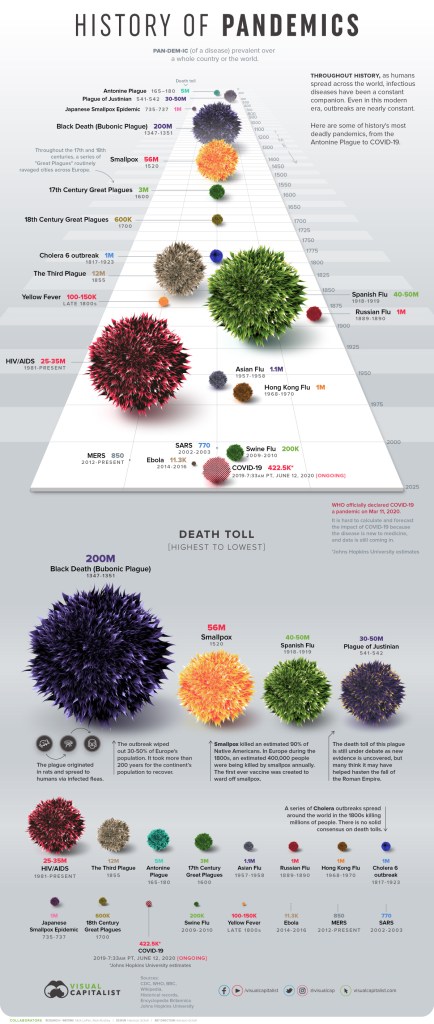
Pandemics and Epidemics are no novelty to the 21st Century, and by tracing them through history we can see both how medicine has developed, but also the worrying increase in their frequency. Whether or not medical efficiency is cancelled out by the growing proximity of them is something yet to be explored.

The increasing proximity of both pandemics and epidemics is perhaps indicative of a wider issue that the government are failing to address – climate change? the meat industry? nuclear production? genetic modification? These events are undoubtedly connected, and one cannot be dealt with in isolation. All is well that the experts know the answers and ‘quick-fixes’ but what about all of us? What about the people who are actually able to initiate widespread change?

Where scientific developments have helped us answer a plethora of questions about our past, there is an evident disparity between communication about the past, and the trajectory of our scientific future. While we are constantly reminded of our bleak future regarding issues like climate change, there is a lack of communication between scientists and the public to explain the reasons for the anticipated trajectory of the coronavirus specifically, but also how we can prepare for future pandemics. Instead of invoking change, this ambiguity creates a chain reaction; a lack of explanation and understanding tiggers an inability or unwillingness to inspire activism to prevent the reoccurrence of such issues.

History of Some of the Worst Global Pandemics Since Ancient Greece:

Plague of Athens: 430 B.C. – Taking place shortly after the war between Athens and Sparta with some estimates putting death tolls as high as 100,000 people. Bearing in mind the significantly lower population numbers

The Black Death: 1346-1353 – Stretched from Asia all the way to Europe as a result of an excess of the Yersinia pestis bacterium. Estimated death toll of 25 million people.

The Great Plague of London: 1665 – Tearing through London in 1665 and 1666, the bubonic plague killed 20% of the population of London. The disease was believed to be transported through animals, and as a result, thousands of cats and dogs were slaughtered.

Spanish Flu: 1918-1920 – Spanish Flu affected people from the South Seas to the North Pole with around 100 million deaths. World War I undoubtedly acted as a catalyst for Spanish Flu. While Spanish Flu did not start in Spain, it had one of the lowest levels of censorship, and therefore the first reports of the pandemic came out of Spain.

Aids Pandemic 1981-present day – The AIDS death toll stands at 35 million world wide. Since its discovery, it has effected people predominantly in Sub-Saharan Africa.

H1N1 Swine Flu pandemic: 2009-2010 – Caused by an excess of H1N1 in Mexico, within one year it infected almost 1.5 million people, killing between 151,700 and 575,400 people.

West African Ebola epidemic: 2014-2016 – Tearing trough Western Africa there were 28,600 reported cases of Ebola and 11,325 deaths.

Zika Virus epidemic: 2015-present day – Zika Virus is carried by mosquitoes and victimises pregnant women infecting their unborn children causing birth defects. These children unfortunately do not live for more than a few months in best case scenarios.

Coronavirus (2002-2003, 2012-Present) – Coronavirus is an umbrella term, and Covid-19 is a single branch of that. There have been several coronavirus related pandemics such as the increasingly well known SARS, and MERS. However, since its discover in 1937, the pioneer of coronavirus has been poultry bronchitis, otherwise known as Bird Flu.

Photo: https://www.visualcapitalist.com/history-of-pandemics-deadliest/

While evidently these also include epidemics, many of them had the potential to develop into pandemics. It is this potential that we should be analysing as a warning sign for the future, rather than breathing a sigh of relief at our lucky escapes. Humans have been on earth for near 7 millions years, and since then it has been ‘the world according to us’ – this is clearly changing. While human has inflicted conflict on human, and country has waged war against country, we are now being confronted with the possibility of an entirely new type of global war – one where all humans are united on one side against a new type of authority.

We can acknowledge that this is categorically not the last pandemic we will see in the next few years. However, it is crucial that we change the way in which we acknowledge them. Boris Johnson’s attitude of ‘heard immunity’ was too little too late this time round, as he felt when suffering severely from the virus himself. While comparatively Covid-19 has relatively positive statistics (depending on age and health status) compared to former pandemics, the devastation has been undeniably horrendous, with Britain’s death toll reaching almost 60,000 at present. One can only imagine what it would look like with a more aggressive virus or higher death rate percentage. I implore you to keep commending the NHS despite the termination of Thursday night clapping. From someone who has spent a large amount of time in and out of hospitals, they truly are amazing people, and they are putting themselves and their families in immense danger for our own well-being. It is down to us, as well as the government to remember the devastation of this pandemic, to stand with our NHS and key workers, and to carry this newfound solidarity in the face of devastation in the forefront of our minds as we move past Covid-19 onto different pandemics that will no doubt rear their ugly heads once more in the next few years.

Resources:

  1. Journal of the Plague by Daniel Defoe (1722)
From 1665 to 1666, bubonic plague returned to Britain and devastated the city of London — killing roughly one quarter of its population in the span of 18 months. Over 50 years later, Daniel Defoe drew upon historical documents to write a realistic account of the plague’s effects on the city. Defoe’s novel still has the power to unsettle — like when he writes about families forced into quarantine due to an infected family member: “[I]t was generally in such houses that we heard the most dismal shrieks and outcries of the poor people, terrified and even frighted to death by the sight of the condition of their dearest relations, and by the terror of being imprisoned as they were.” https://www.vulture.com/article/best-pandemic-books.html

2. TED Talk: Bill Gates on Pandemics as referenced above

3. Netflix Series : Pandemic

Following the outbreak, development, research, and cures of pandemics throughout history